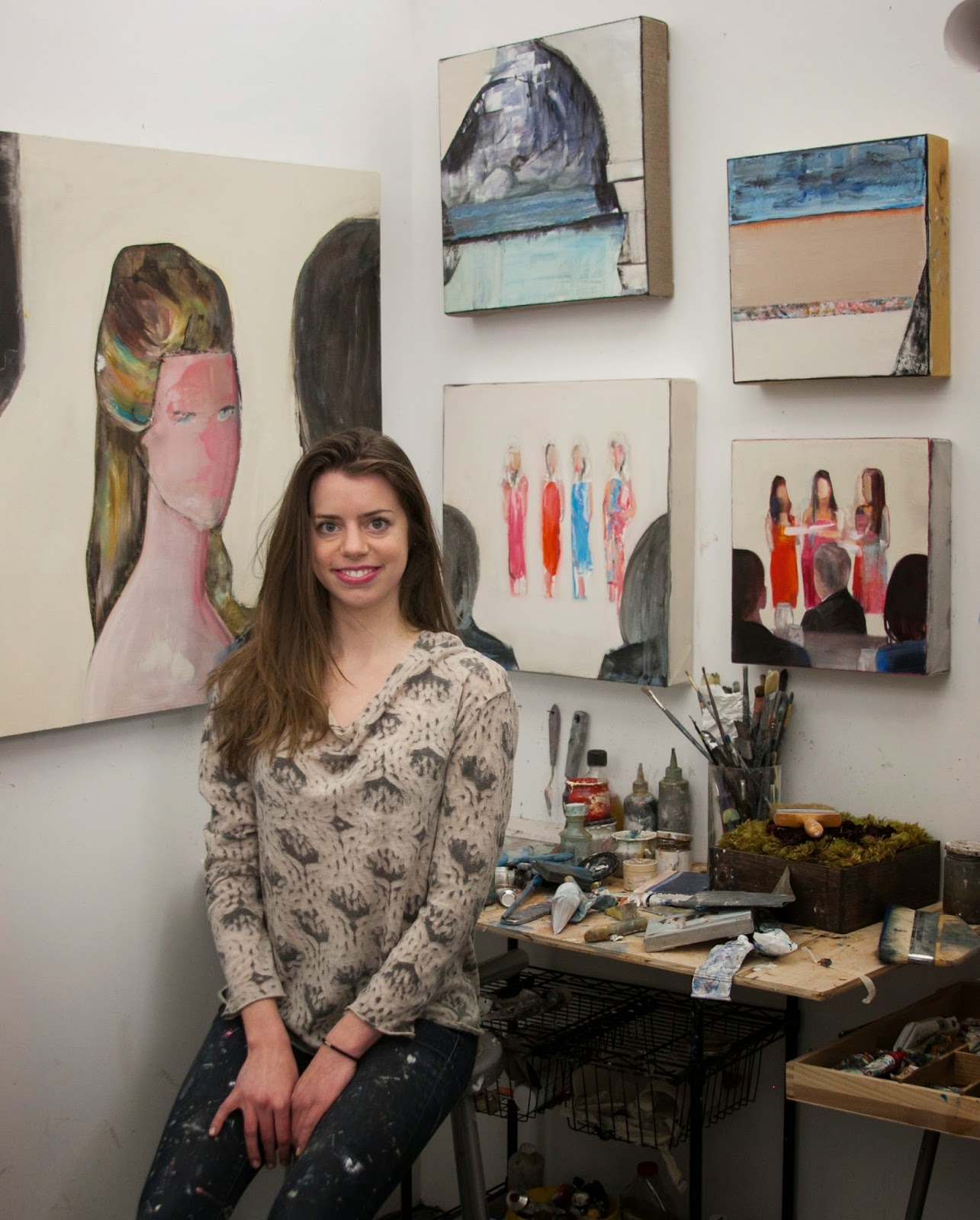
Studio Portraits: Alexis Hilliard (MFA 2014)

TRIBECA BALL TOP TEN (for artists-in-residence)
by Nicolas V. Sanchez (MFA 2013, Fellow 2014)
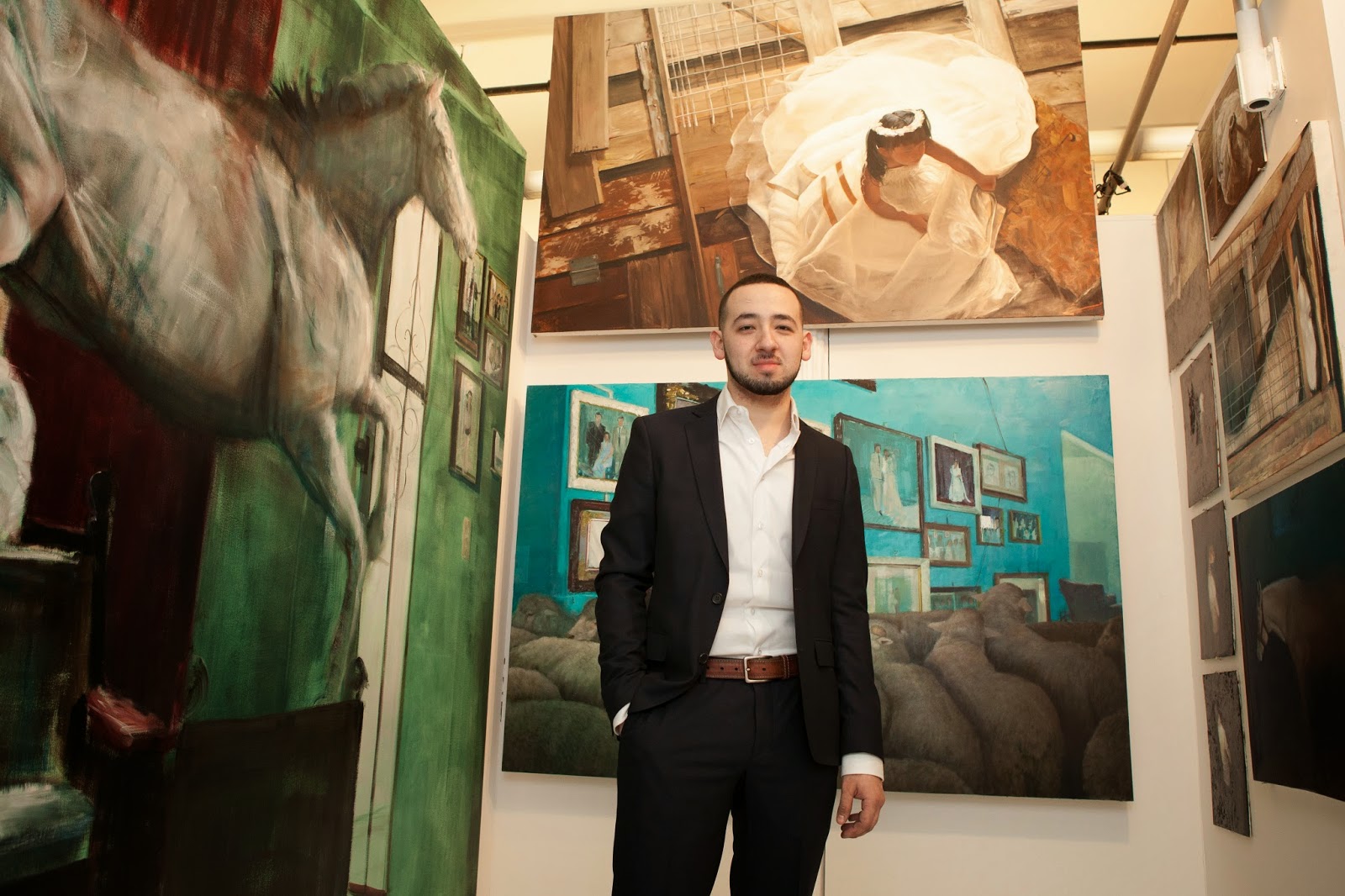
Tribeca Ball is an annual event produced by the Academy to showcase its stellar artists. The Academy invites a tremendous amount of people who are all eager to visit the school’s artists-in-residence and see all of their work. As a student, you participate in the event by displaying your work for easy viewing or by simply just working in your studio like any other day. It’s a great opportunity for emerging artists to gain experience in a social environment where your work is front and center.
As artists, we each have different goals, some of which may include meeting people, introducing your work, and possibly selling a piece or two. When asked by the Academy to give my top ten list of preparations and things to keep in mind during the days leading up to the Tribeca Ball, here is what I came up with…
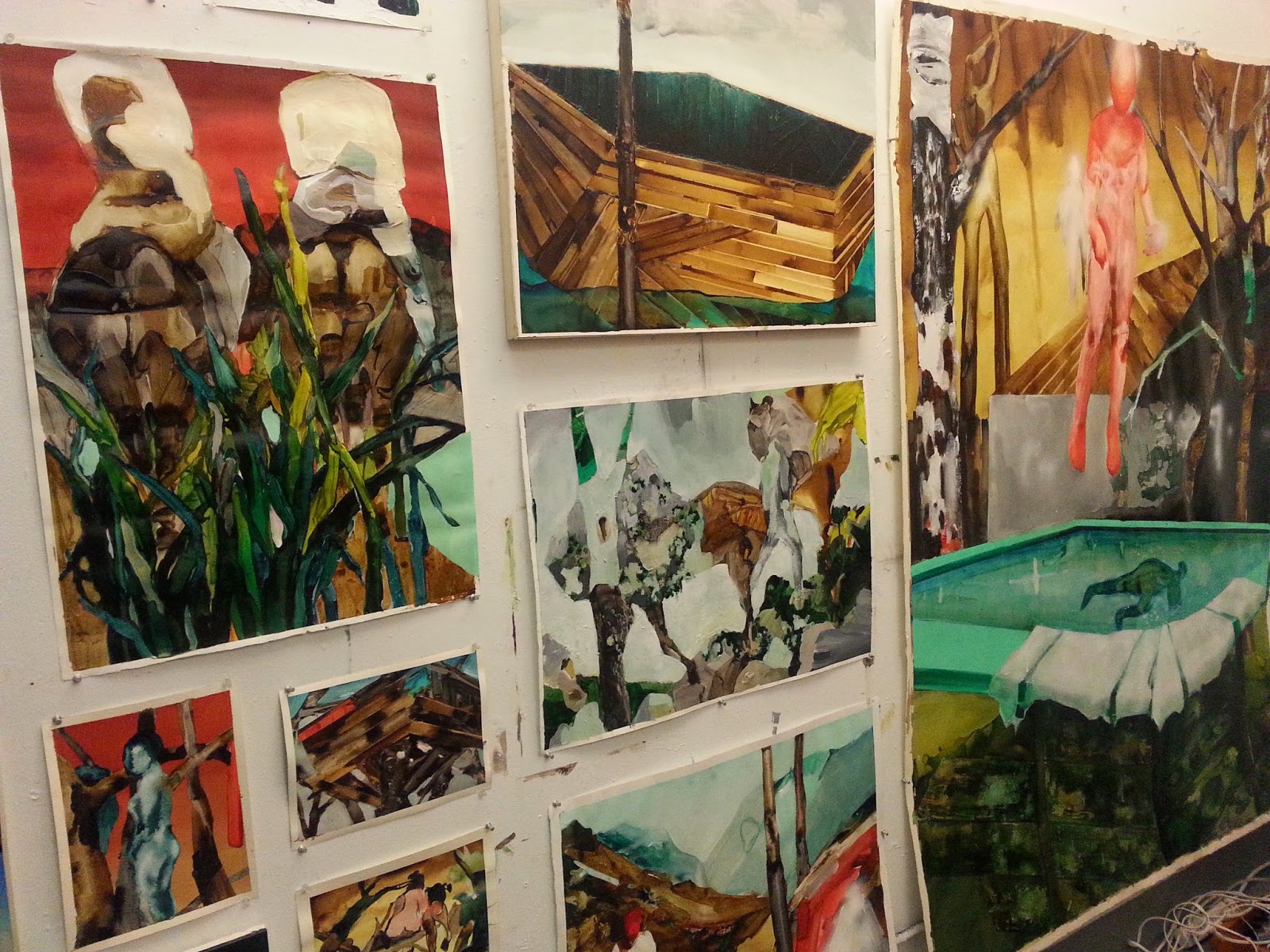 1. Arrange your work. You can choose the “all over” salon style, the clean selected works gallery look, or somewhere in between. Think about your goals for the night and what arrangement will help your work shine.
2.Clean up vs natural work space. Again, you don’t have to go through all of the trouble of re-arranging your studio. Letting people in to your unique work space can be just as interesting and exciting as organizing and exhibiting your work.
3. Be prepared. Have business cards, a sign-in book, your website updated, prices for your work (price list), and a pen. Always have a pen in hand. You look amazing with a pen. Preferably a ballpoint pen.

7. Be engaging. Don’t be afraid to highlight your work or yourself to let people know a little something about you, especially if they are looking intently at your work. Speak up! A conversation starter could be, “I made that while on my residency in China..” or “Please buy that. I haven’t eaten in 73 days.”

9. Be yourself, not that other guy…unless that other guy is very sociable, positive, funny, smart, talented, incredibly good looking, and overall so much cooler than you, then yea…sorta, kinda, maybe be a little like that guy.

There are many other helpful do’s and don’ts for Tribeca Ball. If you want more specific help based on your work, your studio location, how to feel more comfortable meeting new people, make the night an overall positive experience, what pen looks great on you, dance moves, what hat to wear, and goat sounds to make, I will be available anytime leading up to the event to visit your studio. Holler! See you at the Ball!
.jpg)
Studio Portraits: Madeleine Hines (MFA 2014)
Studio Portraits: Garrett Cook (MFA 2014)

Studio Portraits: Zoe Sua Kay (MFA 2014)

WE’RE ALL JUST THE SAME SILLY PRIMATES
 Q: Tell me about the start of your modeling endeavor. How did it start? How long have you been modeling? What was your first experience like?
Q: Can you describe your typical day as an Academy model? How many hours do you pose? For how many students? Which classes?
 Q: Anything out of the ordinary happen to you while modeling? Any funny anecdotes to share?
  Q: Finally, how does modeling fit in with your other work?—(a chance to promote yourself here)
###
To learn more about modeling, please contact Jessica Augier (jaugier@nyaa.edu), our model coordinator.
IT FEELS AS THOUGH EVERY MINUTE YOU HAVE TO TAKE A LEAP OF FAITH
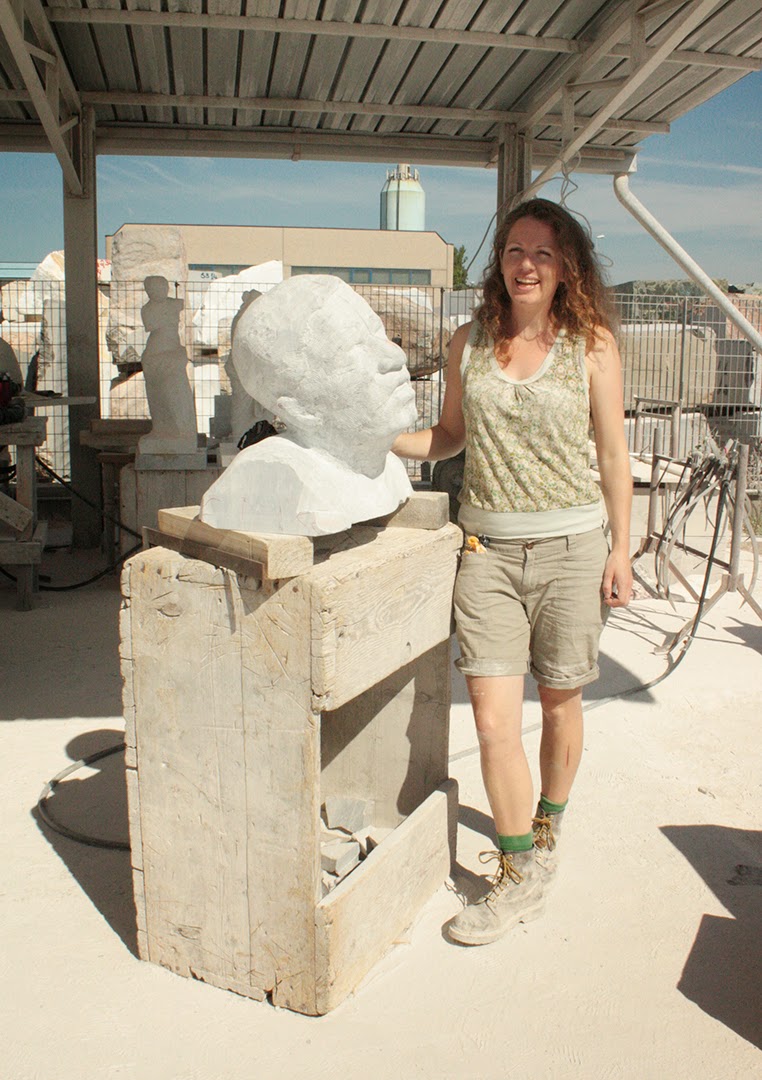
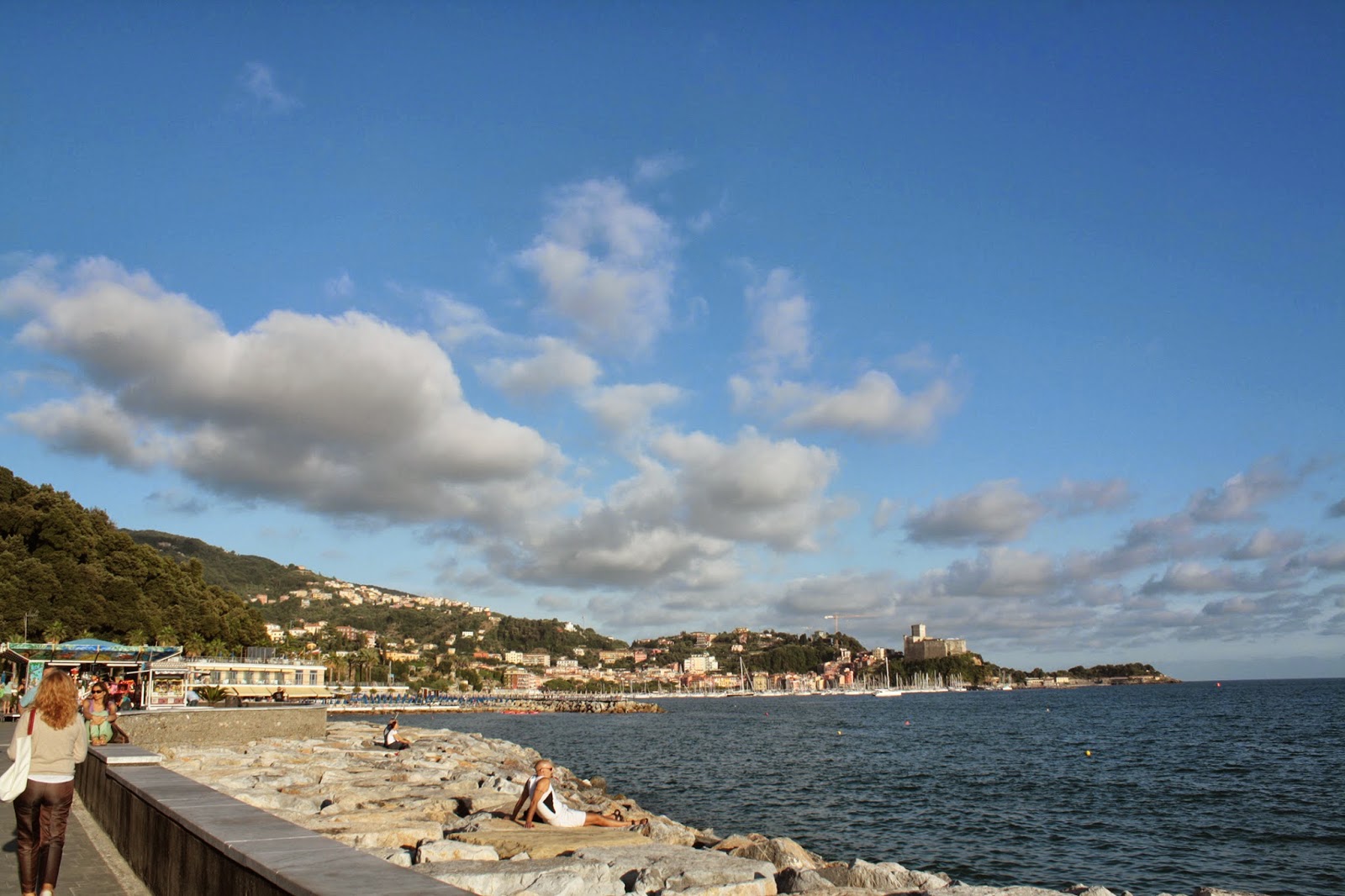
Every morning we were expected to be at the Corsanini Studio and stone yard by 8:30-9:00am, so we were up for breakfast by 8:00am. After changing into work boots and a respirator, ear defenders and shaded safety glasses, we got to carving. The set up was perfect. The stone yard is outdoors and is open on all sides so there’s always a breeze. There is a spectacular view up to the quarries and a grand sense of space. There were cranes and forklifts and lots of strong muscles that made the stone seem weightless. After working for a few hours, all the artisans from the studio ate lunch together upstairs. Lunch was always a gorgeously, simple Italian meal of pasta and sauce, a salad picked from Massimo’s garden, sometimes cheese and meats or a home cooked meat dish, a small glass of red wine, occasionally chocolate and a shot of grappa to conclude the meal. I always left the table with a spring in my step. We then carved until last light, about 7:00-8:00pm. Marina de Carrara is very close to the coast so we’d refresh in the sea with the very last rays of sun and then sample a pizza place with their own special secret family recipes for dinner until going to bed from sheer exhaustion. This was my routine, six days out of the every week, for the two and a half weeks I was there. Needless to say, it was the most demanding art experience I’ve had.
 Many people have said how hard they believe stone carving to be. I have always revered it and treated it with such respect that I was almost afraid to try. I needed to get better at everything else before I could manipulate a precious piece of marble. In Carrara there is so much marble they pave the streets with it. Marble as big as a suitcase can be thrown in the dumpster as an offcut. The very first day, we sourced and heaved a piece out to become our first fledgling attempt at carving. We bumped and stuttered and fumbled through the first steps. I was in a state of constant perplexity. How do you keep your eye protectors from fogging up while wearing a dust mask? I was always readjusting my mask placing it higher or lower on my face. I ate a lot of marble dust and got a lot in my eyes. But then with the right tools held in the right way, it became almost effortless, like a hot knife through butter. This was immensely satisfying. On that random offcut we were free, not afraid of making an error and making things up as we went along. Working on the primary piece for our time here was different; it was much harder!
 The greatest challenge was measuring. Using the huge angle grinder while shifting so much heavy material. It took a while to wrap my head around trigonometry again. I had to translate the bozetti (Italian for maquette) to the marble block and match up the four cardinal points. At that stage, there was so much to learn and we were also holding the carving tools for the first time. We came to learn that the angle of the point you are trying to reach needs to have two known points at a 90-degree angle on the same plane as the point, and the cala, or depth measurement, should be as perpendicular to the point as possible. That information is vital and it didn’t sink in easily. I really freaked out when the very first point we went for was the tip of the nose, the center of the face. One day I took the whole day to get two points. Another huge challenge was just negotiating the position of the head. The head is slightly inclined to the right, and turned to the right and tilted upwards. Your eyes always want to correct this and level the face. I wish I could have tipped the 300lb block right up to the bozzetti face but I’m not that strong. After removing what felt like mountains I was only half way.
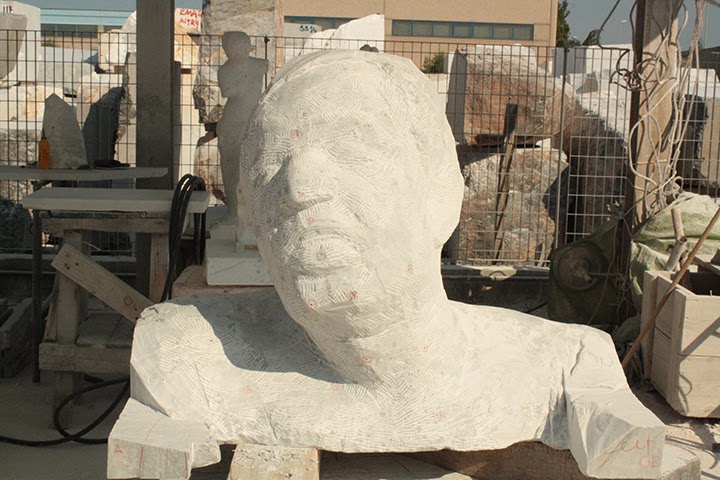 For the last four days, Heather and I decided to visit Florence and Rome, a hard decision because we wanted to keep carving. But not visiting would have been sacrilege. After our experience, we had a new and amplified respect for all things carved in stone. Literally EVERYTHING becomes incredible at the Borghese; my master of sculpture, Bernini had us in awe. Somehow we were not asked to leave and stayed sketching throughout the staggered entry times. They must have seen how inspired we were.
To learn more about the Carrara residency please visit the Residency page on the Academy’s website
Class of 2015 Interviews Part 2: What are your inspirations?
Looking at the Inside – Class of 2015 Interviews (part two)
And who are you inspired by?

Painting has been away for me to rescue my experience from the flow of time. To hold it out, so it can be revisited. Not necessarily to be revisited by me, but for someone else to have an opportunity to see or feel something the way I do. I think painting, particularly in the west, was almost intuitively invented to delay the fleeting reality of sensual experience. Lately, my paintings have been fueled by my fascination with mystery and wonder. I am amazed to be located on this planet, a ball of rock rotating around a spherical fire. It is a very odd, but common situation, and the more I look at things I can’t shake the feeling that my existence is quite weird. When I paint, I don’t think of subject matter or content, I try to let the meaning of the painting reveal itself to me through the process. I don’t know what question to ask when I set out to paint. But it’s not exactly a question that I’m wondering about, it’s a feeling that I have. I cannot formulate the question that is my wonder. When I open my mouth to talk about it, I suddenly find I’m babbling non-sense. But that should not prevent wonder from being the foundation of painting.
 An artist that has constantly been on my mind since first seeing his paintings is Caravaggio. Before seeing his work I had my mind set out to become an abstract painter. Caravaggio’s compositions pulled me in, the way the shapes fit together and activate each other. I have always been fascinated with the slight ambiguity that is in his paintings, which is hardly noticeable at first. When looking at his paintings one is never quite sure what is happening, it is always on the edge. As art historian Andrew Graham-Dixon noted, Caravaggio’s paintings “border between the sacred and profane.”
 |
| Work by Shaina Craft (MFA 2015) |
Veneers of painted flesh mingle on my canvases, blending the borders between figurative and landscape, portrait and abstract. My deepest desire is to create provocative artwork that challenges the foundations of figure painting by continuing to blur the boundaries between digital and traditional work, pushing color, and recontextualizing traditional subject matter. I wield my palette as another means of pushing limits, experimenting with extreme and unfamiliar hues for the human form, creating something recognizable and yet entirely alien, like landscapes comprised of bodies or fluorescent faces fading in and out of existence.
 |
| Work by Shaina Craft (MFA 2015) |
I use myself as a model frequently. People mention it less with that past body of work, maybe because it’s difficult to recognize any one face or person in them. But, I wouldn’t say I use myself as a subject. I’m not painting me. I’m painting the human experience; the faces and bodies are just stand-ins. I work from photo-references most of the time. I took a bunch of photography classes in high school and college so now I can very carefully stage and light my shots. I’ve even shown some of that work in exhibitions. For me, there isn’t much of a boundary between what I consider reference material and what I consider the finished piece. If an image seems to need a painted surface, I give it one; if it needs pastel, I use that. I grew up with a metal sculptor as a mother so some of my earliest memories are of her explaining to me that form follows function.
 |
| Shaina Craft (MFA 2015) |
I read constantly. All kinds of things – poetry, philosophy, memoir, fiction. I’m pretty obsessed with Sci-fi and urban fantasy. My favorite contemporary fiction writer is Charles De Lint. He combines myths and folk tales from cultures all over the world into these beautiful stories that take place in present-day cities. The thing about science fiction is when it’s done well it’s always a reflection of modern culture, like looking in a distorted mirror.
 |
| Work by Gokhan Gokseven (MFA 2015) |
I was born in London and raised in Istanbul. I am the only child of an Opera director and a pharmacist.
When I paint, either in the studio or during classes, I always try to design a general atmosphere for that painting. Now, that plan rarely succeeds – very often the result I get is something different than the initial feel I design before the painting. But usually those kinds of paintings of mine were turned out to be the most successful ones. And whenever I don’t have that initial plan-they usually fail. So for me, having an idea in the beginning is the key, whether that idea later will be shown in the painting or not, does not matter. I like how after watching a horror movie, usually a creepy scene gets stuck in your head. I think that is sometimes the feeling I want to get.
 |
| Work by Gokhan Gokseven (MFA 2015) |
I’m inspired by pretty much everything, and they constantly change. But mainly, I draw inspiration from the negativity. They don’t have to be personal negative matters. I draw inspiration from the music I listen to, the neighborhood I live in, the other art I look at, what is going on in the world, being far from the country where I am from, all these kinds of things. I try not to listen to music much when I paint. I always put on a political talk program from a tube channel or a discussion about existence of UFO’s or something like that.
 |
| Work by Gokhan Gokseven (MFA 2015) |
If I have to think of one name in the history of painting that had the biggest inspiration to me, without thinking twice I would say Hammershoi. I was introduced to his work by a teacher of mine when I was in my junior year in college. I was very influenced by how one can paint such simple subjects and invoke unsettling feelings on the viewer, and repeat this and never be repetitive. That is a very hard thing to achieve. His paintings are anything but epic. They don’t beg for your attention, they just say “this is me. Like it or not, I don’t care.” I think this is a statement that only the bravest artists can have. Maybe his influence on my work doesn’t show directly, but it certainly made me much more mature in terms of how I approach to picture making.
 |
| Work by Gabriel Zea (MFA 2015) |
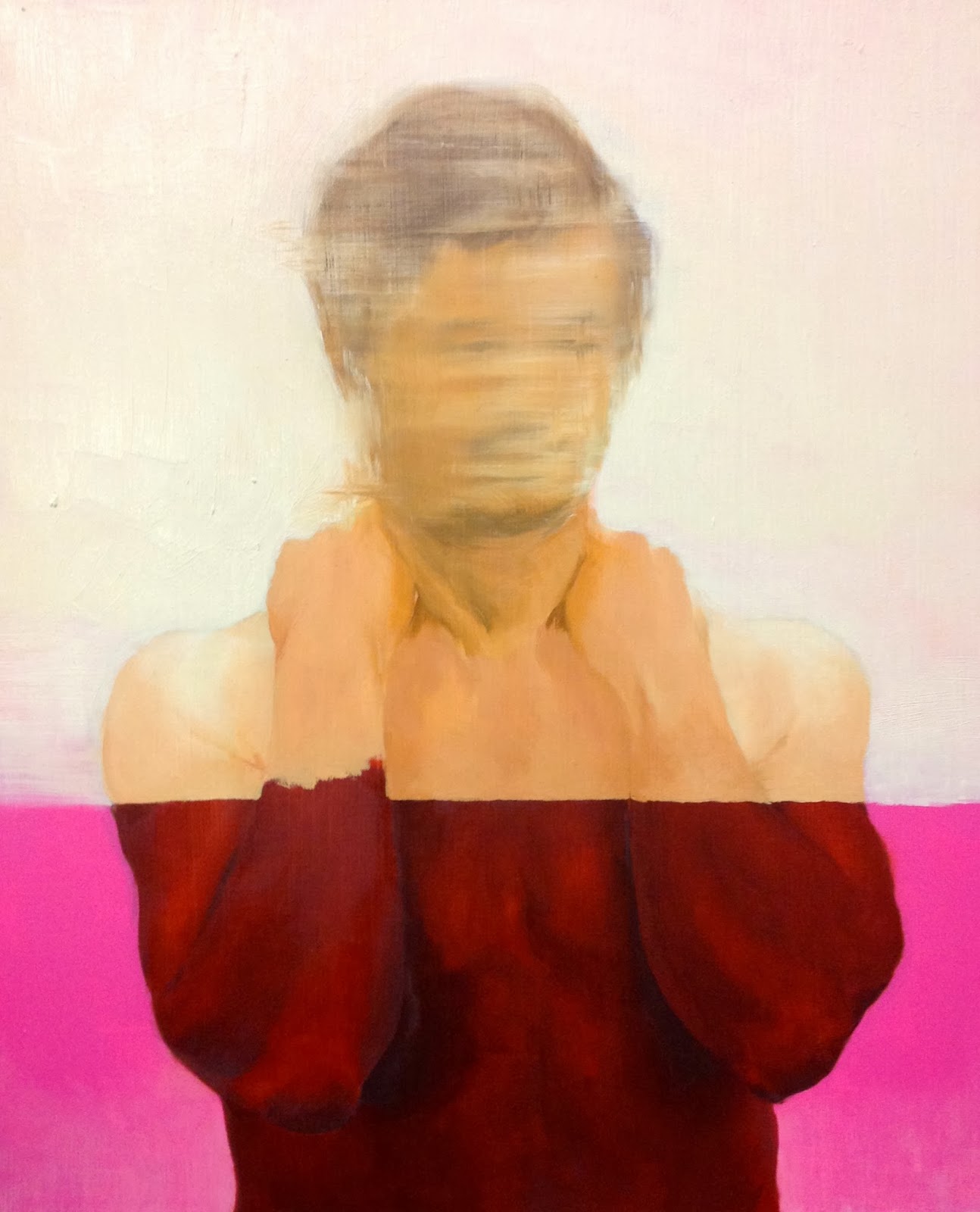
I’ve always been drawn to the elegance of the human form and its ability to reflect our personal history. Bodies and faces typically reflect our lifestyle and I like the idea of being able to understand aspects of a person’s personality based on a sensitive observation of their physical features and gestures. The face especially reveals more and more of our temperament as we age, and it’s in the process of trying to duplicate the nuanced features of a face through elements of line and value that I find my most consistent inspiration. In devoting myself to recreating someone else’s attributes I feel that I’m able to meditate on their personality as a reflection of mine. Hopefully, through both consistent observation and introspection, I can make both our vulnerabilities evident on the surface of their figure. In this world of unceasing flux I want to convey the steadfast brilliance and uniqueness of a person’s personality, and how against time and tribulation their individuality is their protective armor.
 |
| Work by Gabriel Zea (MFA 2015) |
As of late, I’ve been trying to integrate moments that are rendered monochromatically into my paintings, as a means of magnifying the symbolic power of a single color (in the context of a figure), and also in an attempt to simplify my images and give them an iconic quality.
→
THE TA LIFE

I knew I wanted to be a teacher the first time I walked out of critiques in my Painting I class in undergrad. Fairly shattered by the less than stellar feedback, I remember asking my painting teacher, “Am I just not cut out for this?”

During my time at the Academy, I was determined to gain teaching experience. I started out as a Teaching Assistant (TA) for Continuing Education (CE) classes assisting in beginner courses. At the beginner level, I was able to offer practical demonstrations, give feedback on the CE student’s work while observing the instructor’s teaching techniques. After graduation, I decided to continue to pursue teaching and gain more experience by becoming a Teaching Assistant in the MFA Program. I signed up for a variety of courses ranging from studio to seminar classes, expanding my repertoire of subjects I would become qualified to teach.
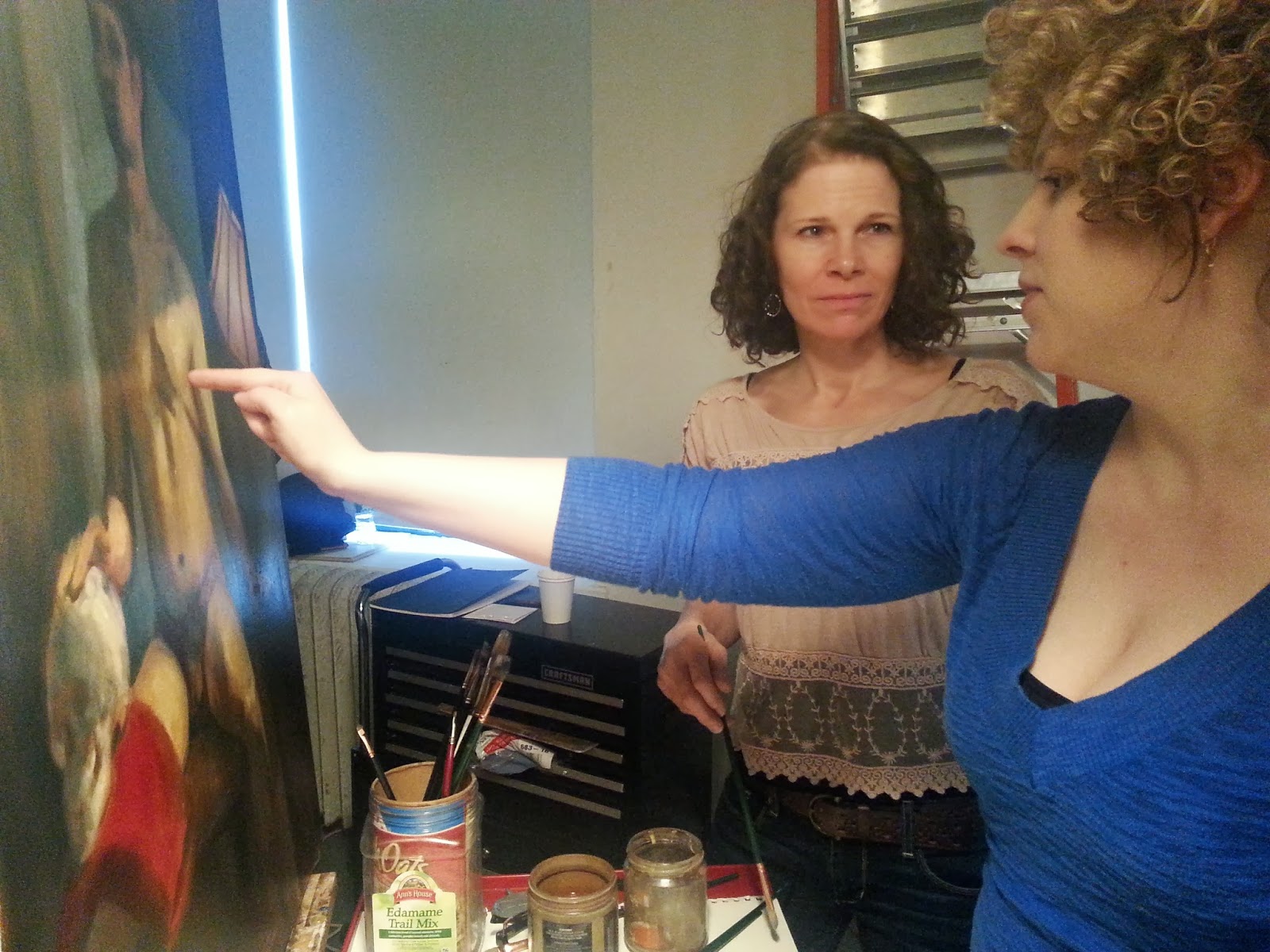
I wanted to go above and beyond what was expected of me. I set out to build relationships with students and extend my participation outside of class. I set up one-on-one meetings, edited research and thesis paper drafts and gave personal studio critiques. For each course, I committed an additional four hours a week to further interact with students and create resources for their benefit. One of these projects included the creation of an online image data base: ART and CULTURE: Images (Art and Culture I: IMAGES and Art and Culture II: IMAGES). To help expand students’ knowledge of artists, both historical and contemporary, I compiled every artist’s name mentioned during each class and uploaded images. This database is an art historical resource that also helps students discover new artists to reference in their studio practice.

As a side project to a class I am currently TA-ing, I am developing an online community that would act as a resource and forum for information regarding studio/group critiques (http://critique-critic.tumblr.com/). CRITIQUE-CRITIC (CC) will be a resource for information about different approaches to art criticism while examining institutional art critiques. This website will not only be a compilation of different perspectives but a place to post student work—in progress or otherwise—to get feedback from other students in programs nationwide. As a direct outcome of this project, I hope to create a platform that showcases emerging artists and writers.
 To date, my work as a TA has allowed me to work with several amazing artists including John Cichowski, Bonnie DeWitt, Catherine Howe, John Jacobsmeyer, and Jean-Pierre Roy. Being a Teaching Assistant has not only helped me improve my ability to demonstrate and communicate the knowledge I acquired at the Academy, but also to create connections with current students, faculty, and alumni outside of the classroom. It has allowed me to pursue my goal of becoming a teacher while also allowing me to give back to the Academy community post graduation.
 ##
Interested in becoming a TA at the Academy? Please contact Katie Hemmer in the Academic Office khemmer@nyaa.edu.
To learn more about Megan Ewert visit her website www.megan-ewert.com