A Teachable Moment
________________________________________________________________________

– Holly Ann Sailors
, MFA 2012
_________________________________________________________________________
Examples of artwork dealing with controversial themes (some w/links):


 |
| Chris Ofilli: “The Holy Virgin Mary” (link) 1996 |
 |
| Kara Walker |

 |
| unknown racist illustration |
 |
| Peter Saul: “OJ”1996 |
 |
| Glenn Ligon: “Benefit” 2007 |
 |
| Manet: “Olympia” |
 |
| John Currin: “The Women of Franklin Street” |
 |
| Lisa Yiskavage: “Pie Face” |
 |
||
Gustave Courbet: “Dreamers”
|


 |
| Carroll Dunham: “(Hers) Night and Day” |
 |
| Gustave Courbet: “Origin of the World” 1866 |
 |
Robert Mapplethorpe: “Fisting” 1978 Carolee Schneemann: “Interior Scroll” |
 |
Eric Fischl: “Tumbling Woman” Jerome Witkin: “Taken” (section)  Jerome Witkin: “Butcher’s Helper: Buchenwald” |

 |
| Gerhardt Richter: “Uncle Rudy” |
 |
| Truppe: “The Fuhrer” |
 |
| Lanzinger: “The Standard Bearer” |
 |
| John Heartfield |
 McDermott & McGough |
Not to Miss
Welcome back Everyone! School is in session and so is the fall season.
 Tonight don’t miss NYAA Senior Critic Vincent Desiderio’s opening at Marlborough in Chelsea. This haunting new series of paintings explores the subtle, underlying context of the human experience through exquisite brushwork and a profound technical narrative.

Also opening in Chelsea, James Cohan is proud to present DANDAN, a solo exhibition by Japanese artist Tabaimo, who represented Japan in this year’s Venice Biennale. Elaborate stage sets were built in the gallery to showcase her incredible hand drawn animations.

Uptown at Gagosian, go see NYAA Senior Critic and last year’s Commencement speaker Jenny Saville’s new show of life-size drawings and paintings exploring the renaissance theme of Madonna and child. Known for her lush, fleshy figures, this is Saville’s first show in NY since 2003.

Afterwards head to the Lower East Side to Kleio Projects for a show curated by NYAA Alum Benjamin Martins and inspired by fellow alum Maud Taber-Thomas. Self Portrait As Monster Truck will feature a number talented Academy artists, past and present, with their interpretations of the title theme.
As for shows that have already opened don’t miss the following;
Alex Katz at Gavin Brown. This is Katz’s first show after leaving Pace Wildenstein for Gavin Brown. The show juxtaposes Katz’s classic somber portraits with minimalist fields of flowers.

Do So Huh at Lehmann Maupin. Home Within Home is an array of installations and sculptural objects that all explore themes of cultural displacement. The centerpiece of the show is a scaled up apartment building ‘dollhouse’ where Suh lived in Rhode Island impaled with a model of his Korean home.

Nick Cave at Jack Shainman. A new series of Cave’s meticulously covered figures in various vignettes exploring individualism, unity, fornication, memory, and the inheritance of personal identity.

Nicole Etienne at Sloan Fine Art. The NYAA Alum’s show aptly titled A Movable Feast, features Etienne’s glitter-filled, overexposed, multimedia interiors superimposed with lushly painted figures, flora, and fauna.


Pitch at RH Gallery in TriBeCa featuring South African artist Paul Edmonds. In this series of ethereal, abstract drawings Edmunds seeks to find a visual correspondence to music specifically in relation to pitch, tone, timbre and stereo.

The accompanying group show Melodymania, referencing a tune you can’t get out of your head, includes NYAA Alum Panni Malekzadeh, Mickaline Thomas, Mathew Barney, Slater Bradley, and Bruce Nauman among others.
And last but not least, Stefanie Gutheil at Mike Weiss. Gutheil’s paintings are vivid, large scale, maximalist combinations of characters, shapes, and patterns.

Fellows Exhibition 2011
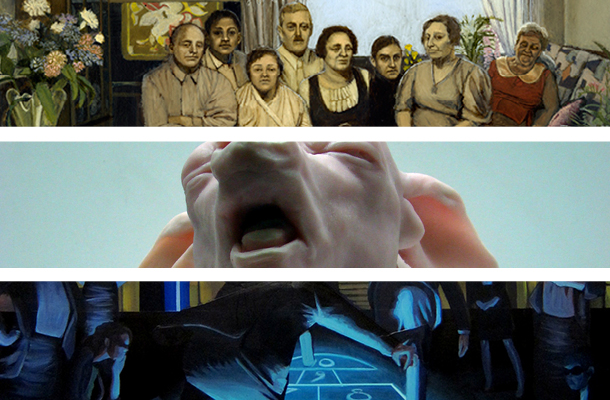
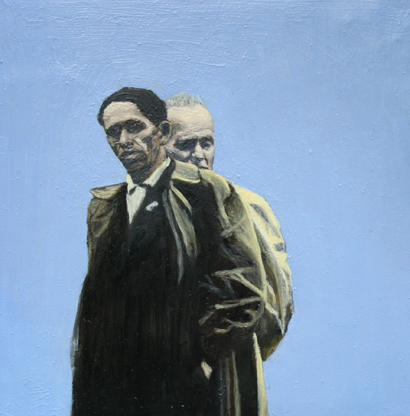
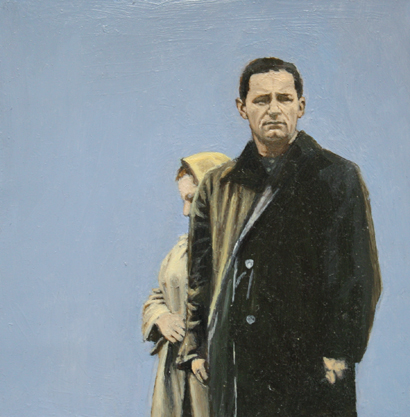
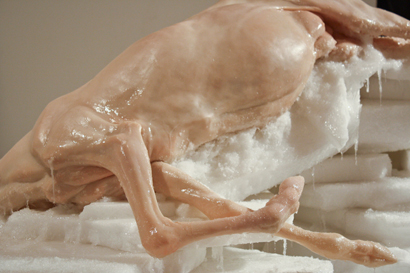
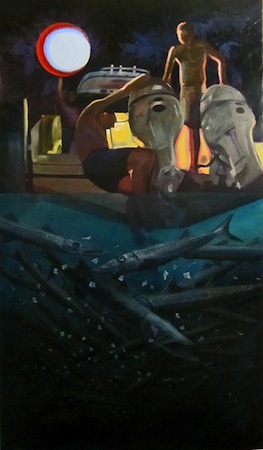
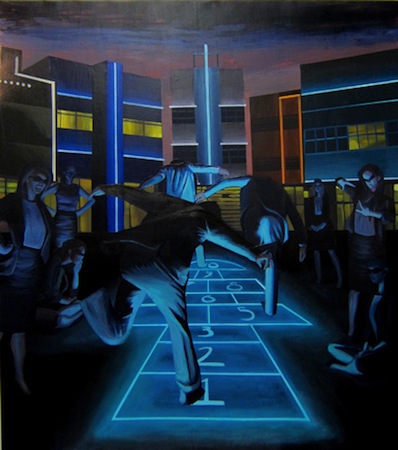
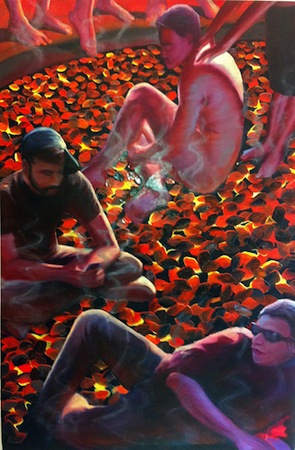
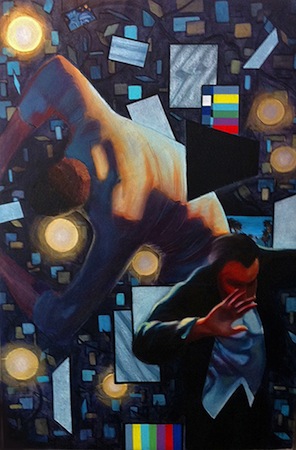
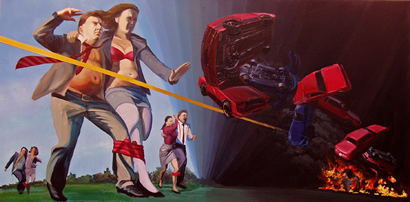
Artwork (details) top to bottom: Maya Brodsky (MFA 2010, Fellow 2011), John O’Reilly (MFA 2010, Fellow 2011), Austin Park (MFA 2010, Fellow 2011)
-
- Maya Brodsky (MFA 2010, Fellow 2011)
-
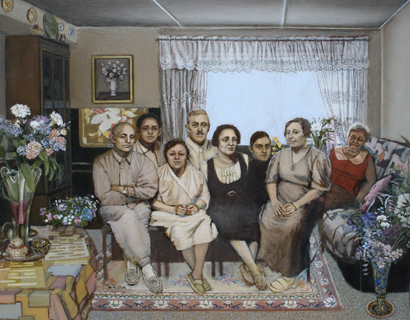
- Maya Brodsky (MFA 2010, Fellow 2011)
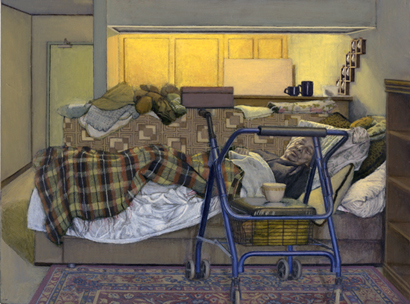
-
- Maya Brodsky (MFA 2010, Fellow 2011)

-
- Maya Brodsky (MFA 2010, Fellow 2011)
-
- Maya Brodsky (MFA 2010, Fellow 2011)
-
- Maya Brodsky (MFA 2010, Fellow 2011)

-
- Maya Brodsky (MFA 2010, Fellow 2011)
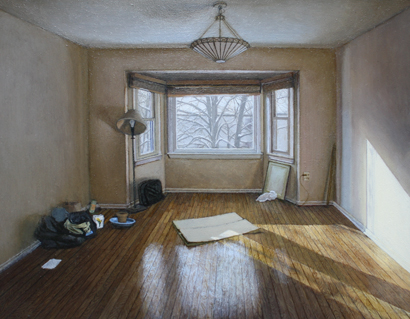
-
- Maya Brodsky (MFA 2010, Fellow 2011)
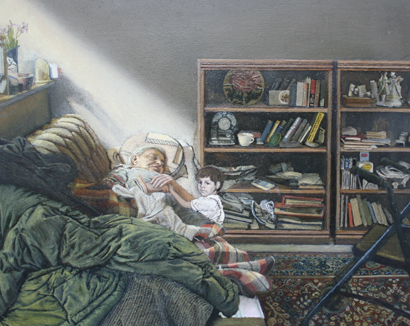
-
- Maya Brodsky (MFA 2010, Fellow 2011)
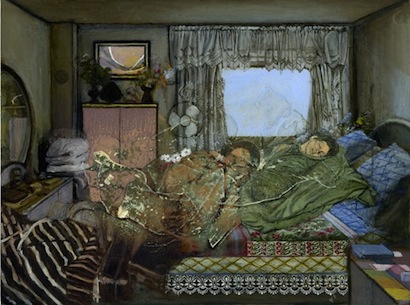
-
- Maya Brodsky (MFA 2010, Fellow 2011)
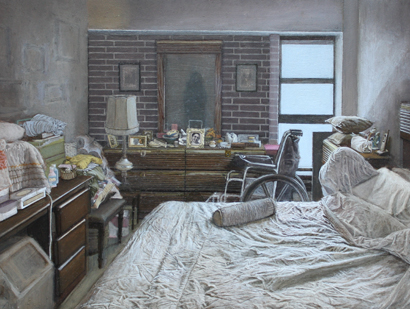
-
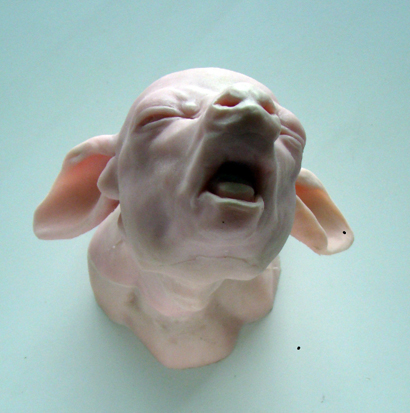
- John O’Reilly (MFA 2010, Fellow 2011)
-
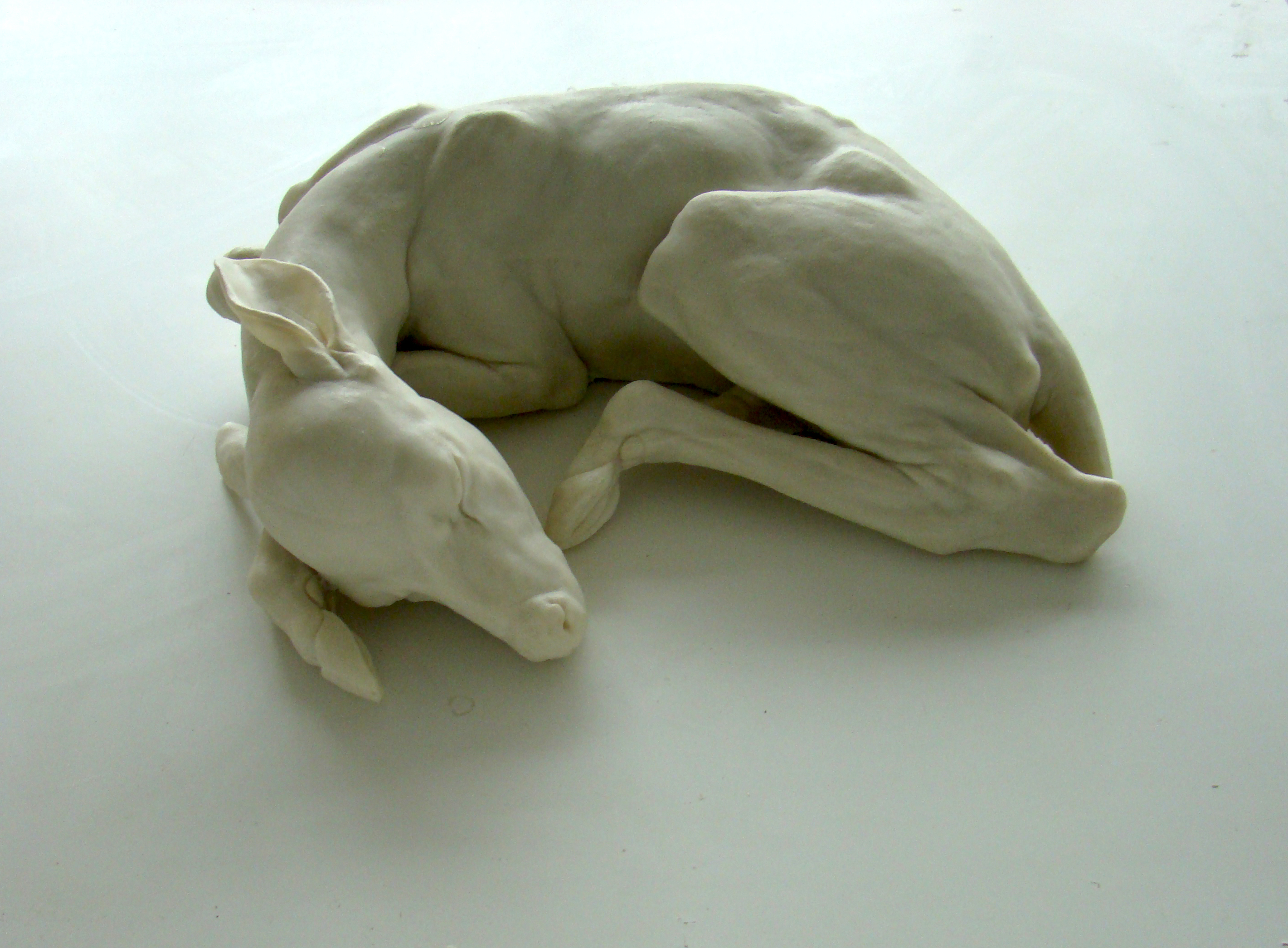
- John O’Reilly (MFA 2010, Fellow 2011)
-
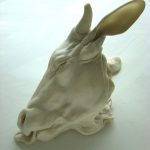
- John O’Reilly (MFA 2010, Fellow 2011)

-
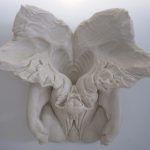
- John O’Reilly (MFA 2010, Fellow 2011)
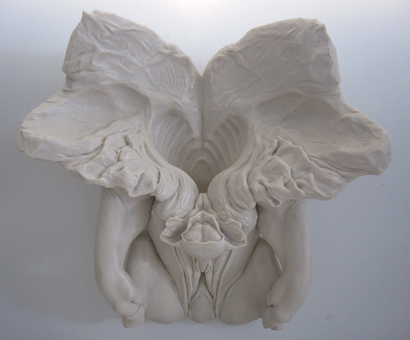
-
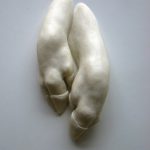
- John O’Reilly (MFA 2010, Fellow 2011)
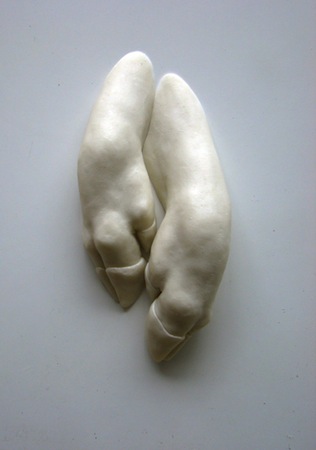
-
- John O’Reilly (MFA 2010, Fellow 2011)
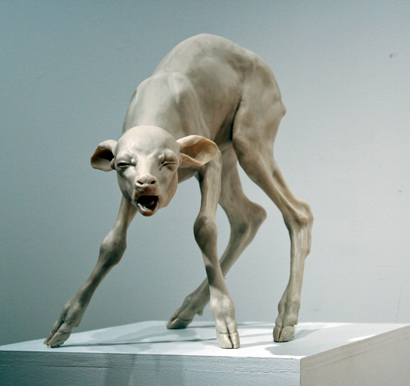
-
- John O’Reilly (MFA 2010, Fellow 2011)
-
- Austin Park (MFA 2010, Fellow 2011)
-
- Austin Park (MFA 2010, Fellow 2011)
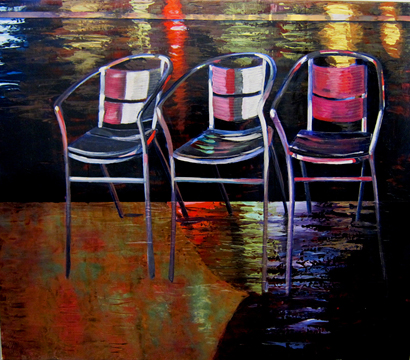
-
- Austin Park (MFA 2010, Fellow 2011)
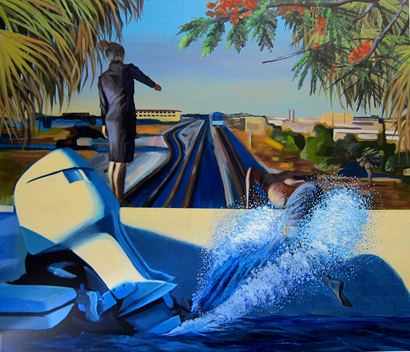
-
- Austin Park (MFA 2010, Fellow 2011)
-
- Austin Park (MFA 2010, Fellow 2011)
-
- Austin Park (MFA 2010, Fellow 2011)
-

- Austin Park (MFA 2010, Fellow 2011)
Quentin McCaffrey in Carrara, 3
by Quentin McCaffrey, MFA 2011

After selecting a stone, a warm and pale white marble taking its name, “Statuario”, from its historical use, I was given a place to work and all the tools and advice necessary to extract form from stone. Seeing that I was basically just scaling up an existing work and transferring it into a different material, the “formula†for achieving the sculpture was actually rather logical; however beginning was probably the most difficult part.
In Carrara, small chunks of marble like the one I was using are often dumpster worthy scraps. Still, I felt very precious at first about the material, and I was overly sensitive to its inability to forgive. I began working very cautiously, taking measurements, slowly carving away some stone, measuring, sawing off an unwanted corner, measuring again, etc. The bulky square of the original stone was diligent and did not want to submit to the saws, chisels and hammers.

This went on for almost the whole first week. The days were long and my inexperience and fears caused me to work slowly, as if the weight of the stone literally remained upon me like a burden. I became Sisyphus or Bunyan’s Christian.
The evenings however, were spent as the Creator intended. Pizza, frutti di mare, pasta and wine were shared and enjoyed over stimulating conversation. We left our (or maybe just my) stiff, anglo-american rigidity behind and finally understood rest.

Once every few days, for an afternoon or the whole day if necessary, the relative closeness of Florence or Siena would beckon us to their treasures and we would escape the dust, trading it for Cathedrals and museums. Florence, swollen with sculptural ecstasy, revealed the potentials of stone, humbling all who bear witness. Michelangelo left us only grace and power, the weight relieved, even in his slaves still bound to the rock. The glory of the work overwhelms you at first with its size, subtlety and charisma. Eventually, your mind regains itself, the facts pour in and you are stupefied again. Without power tools, and restricted to daylight and fires, these heroes of old orchestrated the marble and it sang their symphonies as they squinted through the settling dust.
 At some undefined moment, back in the studio, the stone eventually softened and its weight slipped away. The form I knew began to peek through and assure me that it was hiding in there, and I needed only to carve away the superfluous material and the sculpture would reveal itself. The corner turned, the curve rose exponentially, and it felt as if Sisyphus defied the gods and the stone tumbled over the pinnacle. It was at this point that carving became a joy and the lovely roundness of the forms started to teeter between stone and flesh.
 It was the days following this moment that became the filet of the residency. Having a better grip on the direction of the work allowed me to see what else was going on around me. Watching and listening to the artisans in the studio (as I butchered their festive tongue) and the parallel experiences of my fellow students proved invaluable and became a classroom of its own. Steve’s consistent encouragement and balance of instruction with allowance for personal discovery permitted confidence in the work while maintaining room for a sense of individual growth and exploration.

Quickly the days escaped and the time to leave approached. Shipping arrangements and final trips for the acquisition of coveted Italian tools were made as the hours slid by and were gulped down with the house wine at final meals together. Goodbyes were said, contacts exchanged, Facebook requests confirmed and we parted ways, some staying to work, others sightseeing; me, alone moving north-east to the Biennale in Venice. The trip, in its totality, was exquisite, as if composed by a master of temporal engineering. I would be hard pressed to find a more perfect follow-up to a work-filled semester than the balance of rest, exploration, work and study that was my June in Italy.
ALUMNI SPOTLIGHT: Doris Buehler
What are you currently working on?
I was been preparing for a Single Show at the Gallery Bachlechner, in Zürich, June 18th -31st July 2011. I showed a collection of sculptures, paintings, mixed media and some animatronic pieces around the “belly button”. I have also created a series of wax pieces called Burning Issues that highlight some of the concerns we as human beings have regarding our political and social environment.
I am moving away from the traditional forms that I have previously used and exploring a far more abstract state which I enjoy immensely. This allows me greater freedom in my communication; addressing the issues of today in a way that is more congruent with my feelings. The belly buttons, and the wax pieces, have allowed me to show a slightly more frivolous side, playful and exciting. However, the “belly button” is built around more serious messages. The “belly button†or the Umbilicus Urbis*

What was your most recent big thing?
I currently have a splendid show in a beautiful Park in the South of Switzerland. I also participated at a major event in Switzerland in 2009 where I showed a couple of life-size pieces called “in between” and “Gaia”. I have also shown works in Germany, Israel and the USA.
 |
| Doris Buehler, in between, 2009, Lifesize, Acrystal Prima, Size of Glass 1m x 2m high |
What do you find challenging about your work?
To set a goal of where I want to be with my art in 10 years from now. Since my art encompasses so many different materials and styles it is hard to decide with which I should precede. In the studio I find that the biggest challenges are to find the right materials and reliable suppliers, organising shipping, and organising other people to deliver on time and against promises! Finding time to do my PR, maintain my website, design invitations and plan events is also a challenge, there never seems enough hours in the day. I must get to do that project management workshop!
What do you find rewarding?
The paycheque is nice but much more rewarding is the joy to create, to develop an idea with the right material to attain the utmost expression of what is on my mind. Also I find it rewarding to catch people’s interest and make them curious.
What’s on the horizon for you?
Currently I have two private commissions in the pipeline that will keep me busy until the fall. I have been asked to show a big piece in New Orleans. I am however most excited to put aside some spare time to create a new body of work, a lot of which has been in the drawer for a while, and show it towards the end of the year.
Doris Buehler
http://www.dorisbuehler.li

Carrara, 2
I decided that it would be best to arrive in Italy prepared to start carving immediately. I have been developing a series of simple beeswax heads that hang off the wall. It seemed fitting to make a plaster cast of one of these pieces that I had already become very familiar with, and then attempt to recreate it in stone. I hypothesized that learning the process of transferring the design in three dimensions would simultaneously allow me to see how a different material might shift the content of the work. It also seemed plain to me that the design would not carry perfectly into the new material but would become its own work distinct from the preliminary piece.

Although I much of my recent work has utilized wax, I really don’t see myself as “the wax guy†as much as a materially sensitive artist. I would love to make shows based on the medium of the work. A show in bronze, clay, fabric, glass, resin, stone, wax, wood, etc. I really believe that the material is part of the language of the work, particularly in three dimensions, even though it needs to subject itself to the content and form and not become a novelty or a crutch. This is proved clearly by the Rodin sculptures that are glorious in cast bronze but fail when attempted in marble. The artist’s hand is removed; the work is not the same or even good. The sculpture is somewhere else, maybe it stayed in the 20 minute sketch, but it never swelled into life when it met the firm solidity of stone. This was a situation I wanted to avoid. Doing the work myself, opposed to hiring an artisan to do all of it was a step in the right direction, but did not ensure success.
 After arriving in Italy and enjoying a week gorging on Caravaggio, Michelangelo, Bernini and other sweet and savory treats in Rome, I rode the train north and slightly west along the intoxicating coast to Carrara-Avenza where Steve Shaheen, one of my sponsors and the sculptor who would be teaching me about stone, graciously picked me up, despite being 3 hours late (perhaps by Italian standards this was par for the course). From the first moment it was clear that Carrara was the optimal location for carving stone. The mountains, peering down on the towns cradled between their foothills and the turquoise sea, are full of marble. The quarries clamor up the mountainsides with zig-zag access roads and even burrow into the depths of the mountains, excavating the rocks in cool darkness. Along the coast area, cranes and hangar-like buildings appoint the numerous workshops where artists and artisans, devoted to the creamy marble and the forms that may emerge from it, toil in powdery dust.

I was to work in one such bottega for the next two weeks. Studio Corsanini, complete with its patriarch Luigi (freely doling out his acquired wisdom both in stone work and general life, and doubling as head-chef who prepared glorious lunches for all), Zen-master/Sculptor/Age-defier Itto Kuetani, and a colorful selection of hard working house artisans, was a brilliant place to see a wide variety of working methods and ideas in action in the realm of marble carving.

ALUMNI SPOTLIGHT: Joan Benefiel & Jeremy Leichman
 |
| St. Ignatius Commission |
What are you currently working on?
Jeremy Leichman and I met at the Academy and are both sculptors. We have our own sculpture studio business together, Figuration LLC. We’re currently working on finishing up the bronze castings of a pair of our life-size bronze sculptures of St. Ignatius to be installed in October, commissioned by Fairfield University.
What was your most recent big thing?
We have a beautiful installation – the Fashion District Pilings Project – still on view through August 29th on Broadway between 36th-41st Streets on the pedestrian plazas of the NYC Fashion District. Our sculptures were even in The Wall Street Journal’s Photos of the Week: July 11-15 (photo 9/20)!
What do you find challenging about your work?
It seems like there is no clear path to making a career out of this sculpture thing. You have to make it part of your practice to always be looking for the next job if you really want to make a living out of doing what you love and not be distracted by other things. And we’ve decided that this is the most important thing and the only way to truly do it full time, all the time.
What’s on the horizon for you?
 |
| Read an interview from Flavorpill with Joan Benefiel about the Hudson River Pilings Project |
Notes on Quentin McCaffrey’s Residency in Carrara
 |
| Shaheen and McCaffrey in Italy |
Over the decade since I finished my training as a sculptor in Italy, I have gone back as much as life permits. Part of my annual recharge in the bel paese has involved teaching. While completing my MFA at the New York Academy of Art, I was surprised by the number of colleagues who passionately studied the Western artistic tradition—heavily rooted in Italian history and culture—without having experienced the country firsthand. In 2005 I brought John Jacobsmeyer and a small group of painters and sculptors to the Senese countryside. The intent was to give participants the same intensive coupling of artistic practice and direct exposure to masterpieces which had informed my own experience.
Carrara
In the weeks after the dizzying and malnourished/sleepless whirlwind that is the ascension towards the ever-exciting TriBeCa Ball, one by one e-mails revealing those students selected for the abundance of scholarships, residencies and fellowships trickle down from the committees and faculty meetings in the sky and all students hope to read their name as they anxiously scan the awaited lists. When the queue of those selected for the bulk of the residencies was released, smart phones blazed and thumbs quickly pulled down the lines of text.
Quietly, in between the longer lists of students going to Giverny, the St. Barth hopefuls and those given a summer studio in New York, there was a single name attached to an unanticipated residency: Carrara Residency: Quentin McCaffrey. “That’s my name.†I thought (feeling like a ballerina picked to play the lead in the handsome but strict instructor’s magnum opus), “What is the Carrara Residency?â€
I scanned back through my memory and pieced together the snippets of information that might clue me in to the experience before me: Carrara. Italy. Marble. Stone. Stone carving in Italy. Liz Lemon’s signature line from the popular NBC show 30 Rock came to the forefront of my mind, “I want to go to there.â€
I had done a small amount of work in stone before and basically remember it being really…well…hard. Maybe that goes without saying with rocks, but after having worked in relatively soft materials for the last 3 years (clay and wax) I was a bit nervous. I really wanted to learn about the processes and the qualities of the material, but I also wanted to come away with a piece of art that I would be proud to show. I learned that I would have about two weeks to work in Carrara, and I earnestly hoped to make the most of the time that I would have around the people who made a living working with this material, fluidly shaping it with yet-to-be-discovered tools.
 |
| Quentin McCaffrey, Bushman, 2011, beeswax, paraffin wax, plaster, steel, h: 8.5 x w: 6 x d: 7 in / h: 21.6 x w: 15.2 x d: 17.8 cm |
Get Real
Get Real: Can painting the world as it is go stale?
by Roger White
I appreciate a really good painting of a nude, some fruit, a judge, or a bridge, just as anybody does. I follow portrait competitions with enthusiasm and marvel at the inhuman discipline required to paint the creases in someone’s khakis in oil on canvas with a double-0 sable brush in an age when we don’t even print out our photographs anymore. Yet I must not be alone in my tendency to keep this interest private, because realist painting is grossly underrepresented in art criticism.
 |
| Josh Sonsini’s Byron, 2009. Oil on canvas, 72×60 in.
Courtesy Robert Wedemeyer
|
How can this be? Although in the past 15 years we’ve seen an incredible resurgence in figurative painting — from the genre games of archstylists like John Currin, Lisa Yuskavage, and Kurt Kauper, to the Pop-inflected Expressionism of Dana Schutz and Jules de Balincourt, to the sociopolitical photo-painting of Luc Tuymans and Marlene Dumas — realism per se is still outside of, or perhaps beneath, the discussion of painting in most contemporary-art spheres. When Currin paints a Thanksgiving turkey, we don’t imagine that he’s addressing the same perceptual issues that occupy Philip Pearlstein, no matter how convincingly he renders the plucked, naked carcass. Realism in painting is permissible, provided it serves as the bedrock for more complicated pursuits.
This idea — that the problems of observation and representation occupy a lowly place on the scale of artistic concerns — has much to do with the structure of art education. Most training in the visual arts, regardless of whether the students end up earnest still-life painters or jet-setting curators, begins in the same place: drawing and painting from life. So as they progress through the ranks, trading foundational work for more ambitious projects, charcoal for digital video, this basic engagement with looking and making can remind them uncomfortably of their awkward school days. And in a classic ontogeny-phylogeny mix-up, they mistake their personal progress from basic drawing to critical issues with an evolutionary progression from the naïveté of empiricism to the sophistication of second-order critical reflections.
 |
| Gillian Carnegie’s Thirteen, 2006. Oil on board. 29 1/2 x 23 in. Courtesy Gillian Carnegie and Andrea Rosen, New York, and Cabinet Gallery, London |
It doesn’t help that proponents of pure realism — painting from life and meaning it, without any of this postmodern guff — sometimes praise the practice only to bash contemporary art over the head with its virtues. Realism is humble, accessible, rigorous, humanist, they might say, while the rest of contemporary art is self-aggrandizing, obscurantist, flaccid, and soulless. James Panero, writing in The New Criterion in praise of the “classical realism” espoused by the New York artist and teacher Jacob Collins, positions the movement as a bastion of quality within “the ruinous state of contemporary art.” Donald Kuspit, whose insightful readings of underknown painters like David Bierk and Robert Schwartz do much to further humanist art criticism, often descends to jeremiads on the weightlessness of most contemporary-art production coupled with ardent defenses of hard-to-like artists like kitschmeister Odd Nerdrum. Advocating for realist painting as a vital component of contemporary painting can feel like crossing into a parallel dimension of art history in which the rise of postmodernism is a tragedy of the first order but, paradoxically, one not only can but should paint like Thomas Eakins. Artists who work in the style but wish to participate in a broader cultural conversation face an identity crisis: How do they signal that they are realist painters but also contemporary artists? More important: Why should this distinction exist in the first place?
 |
|
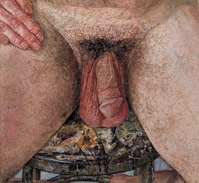
Ellen Altfest’s Penis, 2006. Oil on canvas,
11×12 in. Courtesy Cary Whittier and Ellen Altfest/White Cube, London
|
Lately we’ve seen some interesting attempts to fuse this most traditional of painterly ideas — looking at something and making a picture of it — with the critical concerns of contemporary art. In John Sonsini’s portraits of young Latino day laborers, the financial transaction between painter and model takes on an added political significance. Gillian Carnegie’s deadpan academic paintings of flowers, trees, and nudes exhibit such a degree of self-consciousness that they come off more like abstractions. Ellen Altfest brings a painstaking objectivity to loaded subjects, rendering penises, pumpkins, and tree trunks with the same aggressive yet detached attention. For these artists victory lies in making sure that the very different possible meanings of their works maintain a productive relationship, conceptual freight neither overshadowing nor disappearing beneath formal concerns.
 |
| Catherine Murphy’s Hand Mirror, 2008. Oil/canvas, 46×54 1/2 in.
Courtesy Catherine Murphy and Knoedler & Company, New York
|
If we take a half step back, it becomes clear that realism in postwar American painting has always kept up this relationship with the avant-garde, waging similar critical battles within a different arena. Two artists in particular, Catherine Murphy and Rackstraw Downes, are exemplary of the productive marginality of observational painting. Both came of age in the 1960s, broke with abstract painting early on, and have been steadfastly pursuing practices that don’t quite make sense within the discussion of “pure” realist painting but also fall just outside the comfort zone of many contemporary-art participants.
Murphy has become the preeminent American painter of the close-up, scrutinizing an ever-growing catalogue of domestic objects and situations with a fierce and exacting eye. Pictures from her 2008 exhibition at Knoedler & Company gallery, in New York, depict Christmas lights framing a window at night, four cutout magazine pages pinned to a wall, a woman lying under a striped comforter, and a golden crucifix hanging between a woman’s breasts. In each case, the image is at once instantly recognizable and unexpectedly bizarre, as if the artist had first exhaustively imagined and then excluded every conventional way of depicting the scene and then proceeded with what was left. A series of small paintings executed in 2009 and 2010 show every knothole in the upstate New York house shared by Murphy and her husband, the sculptor Harry Roseman. One can easily imagine such a documentary project, with its dryly Conceptualist tone, resulting in a suite of photographs; realizing it through observational painting is an unexpected achievement.
In the way that the pioneering American observational painter Fairfield Porter viewed his surroundings through the work of Pierre Bonnard and Edouard Vuillard, Murphy organizes paintings of everyday life within the resonant structures of postwar abstract art. Ad Reinhart-esque crosses, Jackson Pollock-like tangles, and Barnett Newman-ian zips abound, concretized as window frames, garden hoses, and the space between two sheets hung out to dry. But beyond this simply morphological relationship to nonobjective artworks, Murphy’s pictures suggest that even the most faithful representations can engender moments of abstract vision, when things “lose their names,” as she puts it, and we glimpse the world afresh.
 |
|
Catherine Murphy’s Moiré Chair, 1991. Oil on canvas, 40 x 46 in.
Courtesy Catherine Murphy and Knoedler & Company, New York
|
For Murphy, the return to figuration in American art in the early 1960s was a reaction as much to the first rumblings of that decade’s revolutionary atmosphere as to the hegemony of abstract painting in the art world. So when artists began kicking around the idea that observational painting — by then as passé as Picasso — could be a viable alternative to abstraction, she felt that more was at stake than just one manner versus another. “I was idealistic. I believed I could achieve universal objectivity,” she says, noting that the desire to achieve a styleless mode of representational painting — as methodically freed of art-historical preconceptions as abstract art had been under Clement Greenberg’s instruction — had an egalitarian intent. Realism could communicate the most advanced ideas of vanguard art in an idiom that reached more people than did high modernism’s sometimes hermetic discourse.
But first some housecleaning was necessary. Observational realism adopted the starkly reductive, ascetic mood of post-painterly abstraction and the phenomenological concerns of Minimalist sculpture. The result was a way of neatly registering the experience of sight and space while emptying the artwork of the hidebound humanist conventions of the style. Philip Pearlstein’s cold nudes, in which, the artist says in a 1972 statement, the human figure is “saved from its tormented agonized condition given it by Expressionistic artists,” play out the formal dramas of abstract painting using academic life models as actors and the studio as a set. Sylvia Plimack Mangold’s interiors reduce the everyday sphere to geometric arrangements of planes and reflections stripped of any vestige of intimist charm.
Painting meticulously and only from life imposes on the artist a set of exacting conditions that precludes many possibilities. If you have to be there to paint something and it takes you a long time to paint it, then that thing has to sit still and not change very much over time. Murphy has gone to great and sometimes perverse lengths to finish paintings: freezing food items in between painting sessions over the course of months, propping up fallen trees with pulley systems, commissioning taxidermied wildlife. Elements of the close at hand also have to stand in for the faraway, and the meaning of an artwork must be generated from precisely this quotidian stuff. In the years since the stripped-down, formalist revival of figuration in the 1960s, Murphy has embraced a more full-bodied idea of content precisely through her adherence to the dictates of patient observation. As much as her paintings are concerned with breaking down the everyday into its abstract components, they also reassemble this world into ad hoc symbolic arrangements. “Hand Mirror,” 2008, casts a stuffed bird reflected in the titular mirror, which is resting in someone’s lap, as the Holy Ghost in an oddly intimate Annunciation. Explaining the relationship between such heavy iconography and the apparent naturalism of her painterly universe, the artist says, “I would never set out to paint an Annunciation.” However, what happens between the impulse to observe something without prejudice and the reemergence of the symbolic forms through which we process our world is precisely the phenomenon that Murphy explores.
 |
| Rackstraw Downes’s Under the Westside Highway at 145th Street: The Bike Path, No. 1, 2009. Oil on canvas, 19 x 65 1/2 in. Courtesy Rackstraw Downes and Betty Cunningham Gallery, New York
|
If Catherine Murphy is the painter of the macro lens, her close contemporary Rackstraw Downes is undoubtedly dedicated to the fish-eye. His signature works are extreme horizontal-format depictions of unlovely industrial sites in which traditional perspective is bent to replicate the painter’s constantly shifting sight lines. Downes participated in the same revival of figuration as did Murphy, jumping abruptly in the mid 1960s from geometric abstraction, pursued under the tutelage of Al Held, into a realist practice. Although his paintings present a landscape of unquestionable, solid physicality, the abstract undergirding of planes and lines is easy to see.
Like Murphy, Downes paints from life, never from a photograph. He sometimes documents the day-to-day struggles of his practice in journals. At a recent exhibition at the Aldrich Museum, in Connecticut, viewers could take in a cycle of paintings made under the West Side Highway in Manhattan along with the artist’s writings and a legion of preparatory drawings. Together these elements reveal the temporality of Downes’s work. The paintings show scenes of apparently seamless unity and coherence: Shadows fall crisply across fields of patchy grass, logical lighting conditions obtain across the long expanse of the canvas, and the ephemeral elements of the landscape — the parked cars, puddles of waste water, folded lengths of temporary construction fencing, even the occasional bicyclist or jogger — exist in a state of arrested flux. Yet Downes’s process is cumulative. He captures an image of a moment through months or years of arduous, repetitive construction. An excerpt from his journal cited in the exhibition catalogue details the days spent waiting for a red Mini Cooper to return to the scene so he could finish painting it.
Although Downes’s images bear a superficial resemblance to the congested photorealist cityscapes of Richard Estes, the two artists’ work couldn’t tell more divergent stories about our relationship to landscape. Estes’ scenes are built around and for the viewer, and the world is transformed into a play of reflections and vantage points. In contrast, Downes seems to choose a place from which to observe precisely because it’s unlikely that anyone would choose to stand there for a minute, much less for the months required to complete a painting. It is no coincidence that the sites Downes often portrays — waste-treatment plants, water-monitoring stations, the understructures of bridges — have to do with the unseen support systems for human habitation rather than the manicured environments in which we go about the business of our lives.
 |
| John Dubrow’s World Trade Center, View of Manhattan, 1996. Oil on canvas, 90 x 96 in.
Courtesy John Dubrow and Lori Bookstein Fine Art, New York
|
Despite its sprawling, usually maligned pluralism, contemporary art is unified by its preoccupation with the emerging over the established, with new forms, new ways of being in the world. Because of this impulse, contemporary art gravitates toward the most salient emblems and loci of rapid change. In the West these have lately been found in the area of technology: the delirious possibilities of digital reproduction and distribution, the teeming multiverse of Internet life, the involutions of media culture. All this is to say that with respect to the drive to be contemporary, the realist painter can seem as ill equipped to participate in the discussion as a lyric poet at a programmers convention. What’s more, trends in contemporary art emerge, peak, and fall out of fashion, art stars are minted and discarded, in less time than it takes to finish a single laborious painting. There’s nothing less like watching the latest Pixar film, or rethinking immaterial labor while socially networking, than looking at realist art.
The strength of realist art is that, as all ambitious art used to do, it calls us out of our habits and asks us to entertain a different set of rules or ask a different set of questions, for art and for living. In this case, the counterfactual situation we’re being asked to imagine is nothing more or less than the experience of everyday life minus the signature experiences of the zeitgeist that contemporary art tries to reflect. Should realist painting then have a larger role in contemporary art? Well, why does it need one?
White, Roger, “Get Real.” ARTINFO. February 12, 2011. http://www.artinfo.com/news/story/36967/get-real/?page=1, Copyright © 2011, Louise Blouin Media. All rights reserved.