Miami Basel
Think what you may about the commercialization and commodification of art but it is unavoidable. Art fairs, though the pinnacle of the trade show business model, are a critical part of maintaining a contemporary dialogue and can be an integral part of exposure for many artists. If anything, art fairs are a reassuring reminder about how vast the art world really is. Though they occur globally and at multiple times during the year, none offers the spectacle and debauchery of Miami in early December.
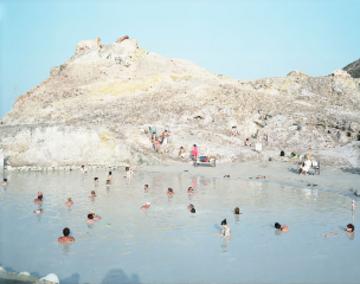
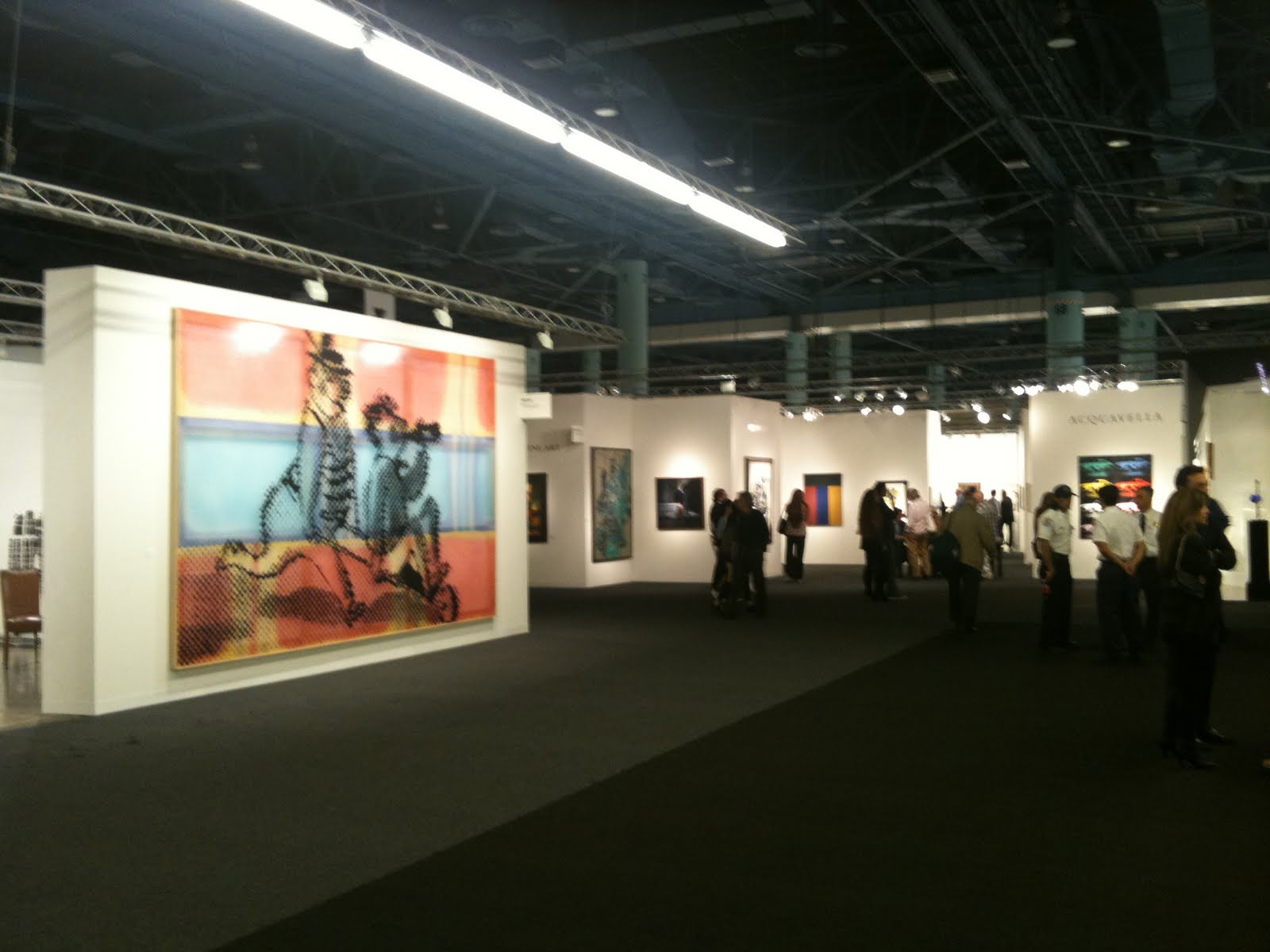
Basel began in Switzerland in the 1970’s and started in Miami in 2002. Though it is the moniker for the high brow show an the Miami Beach Convention Center it has come to be an umbrella term to include the many satellite fairs surrounding it. There is an endless amount of art, people watching,and parties. South Beach is overrun by collectors, advisers, press, artists all looking to have a good time. This year was seemingly an art buying frenzy; perhaps to encourage buyers but spirits generally appeared high. One dealer I spoke with said she was astonished by the amount of work sold with in the first hour of opening. Hopefully this is a sign of years to come. Some trends I noticed were explosions, artists using holograms, a great deal of figurative work and Massimo Vitali. His hyper real beach photographs were everywhere. So was Terrence Koh, the person.
Below I have complied some of the work I was most drawn to from the various fairs and my general impressions:
B A S E L

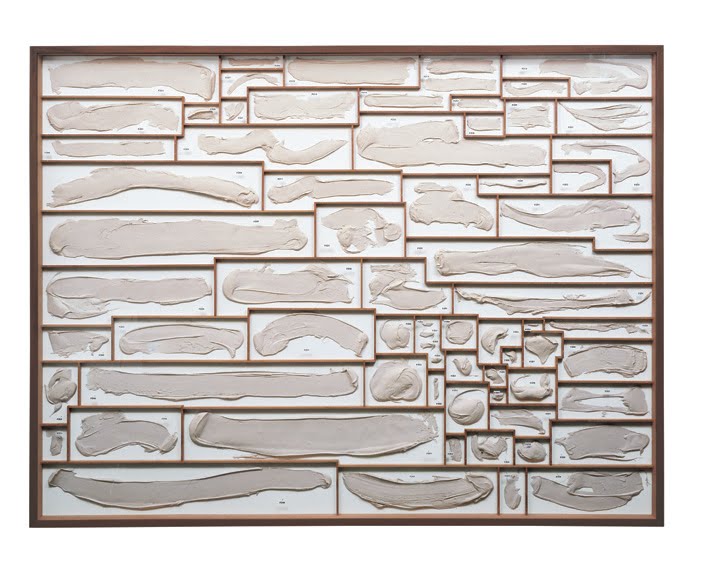
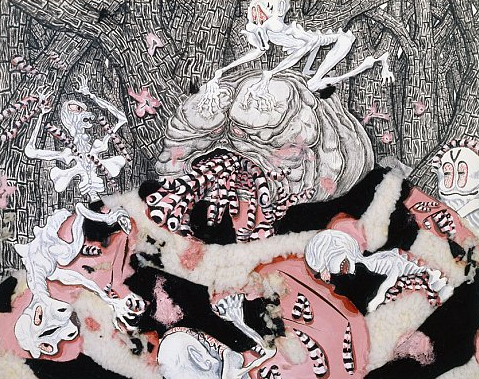
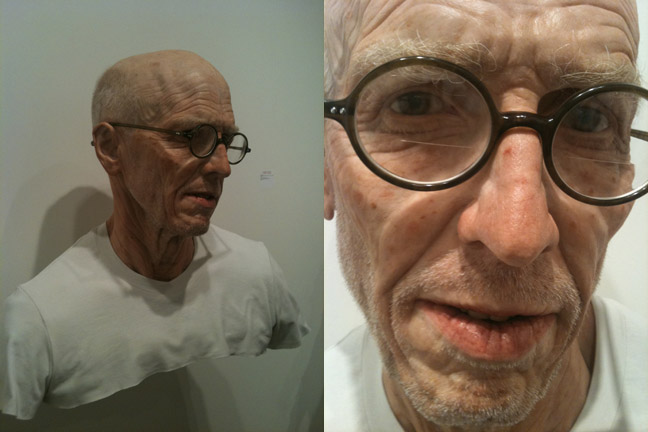

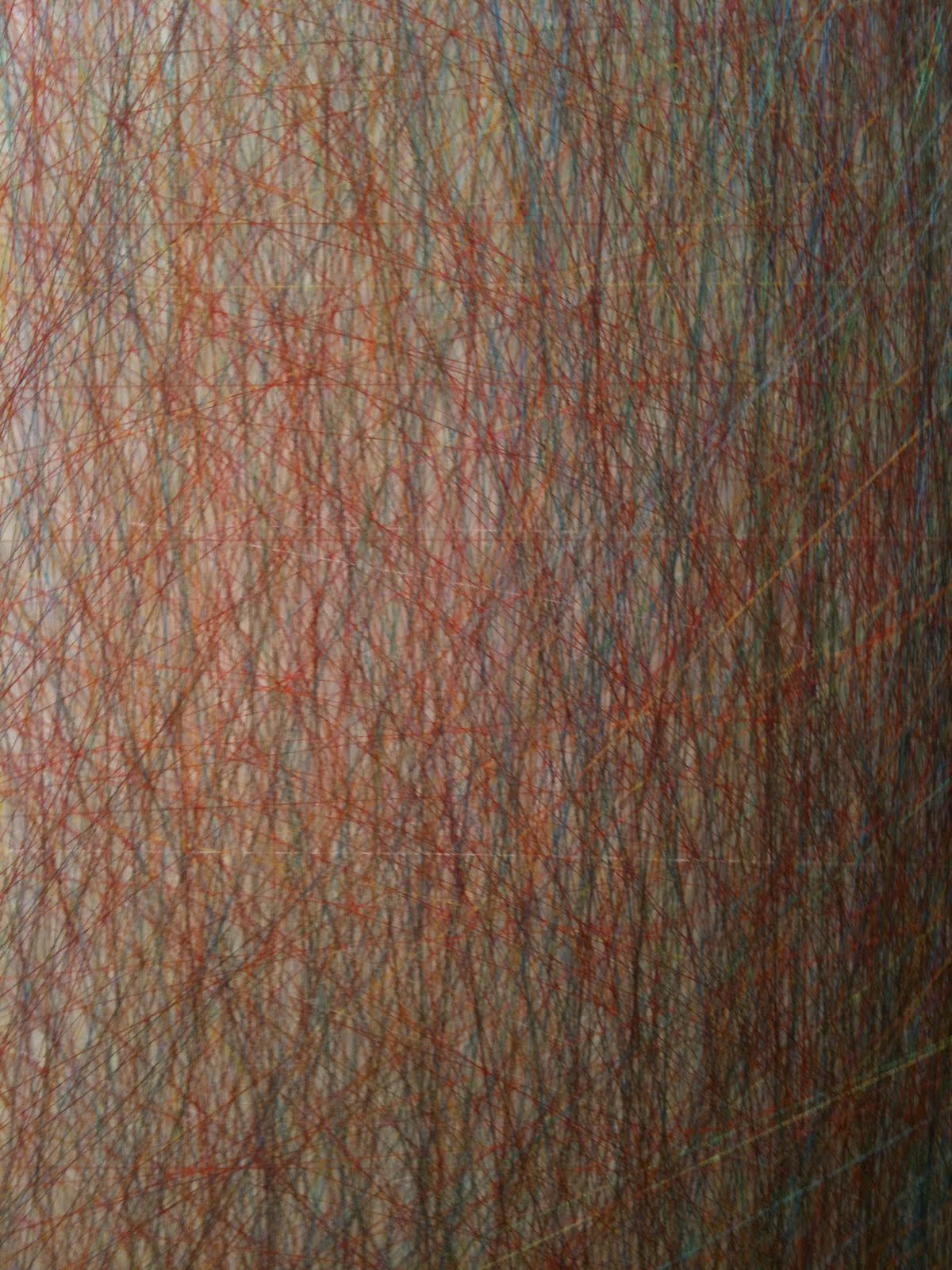
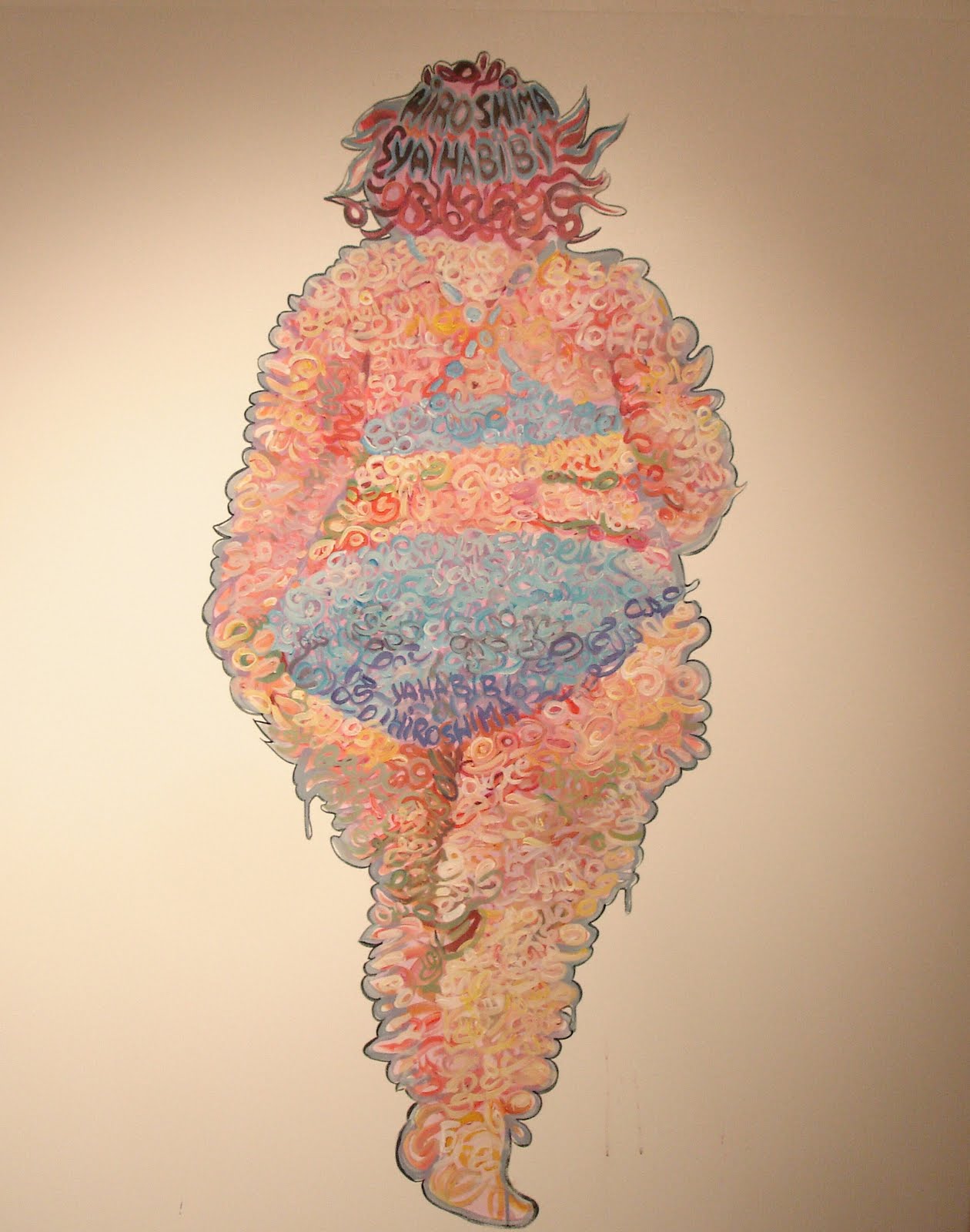
an intricate thread painting by Emil Lucas;
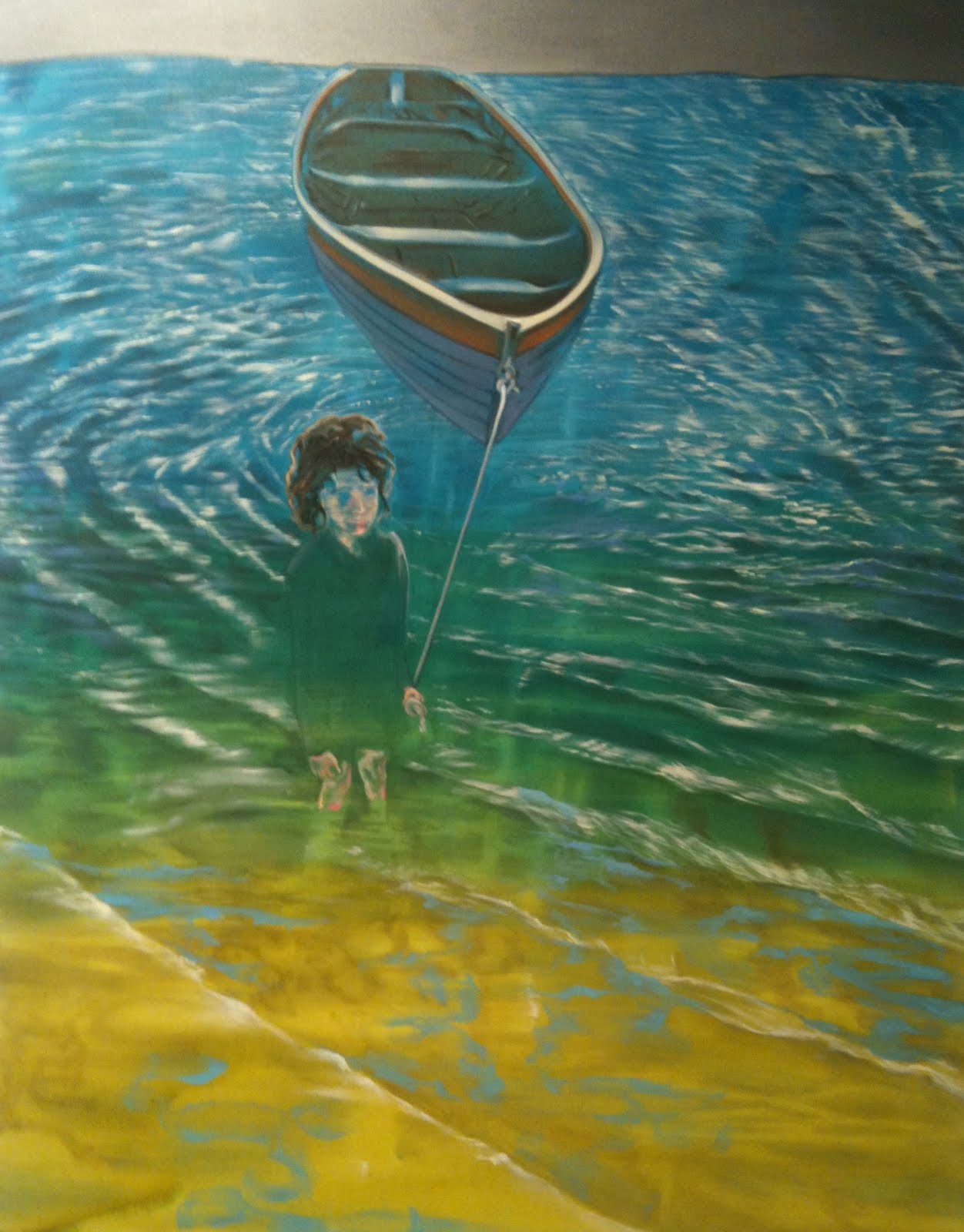
and a very Americana painting called the Bowery Girls (detail) by Kim Dingle.


N A D A ( New Art Dealers Association)
NADA is one of the younger hipper fairs and takes place at the Deaville Beach Resort. You can constantly look at the ocean while checking out the art. It showcases many of NYC Lower East Side galleries. Mostly works on paper though the booths are a bit smaller so its fitting.
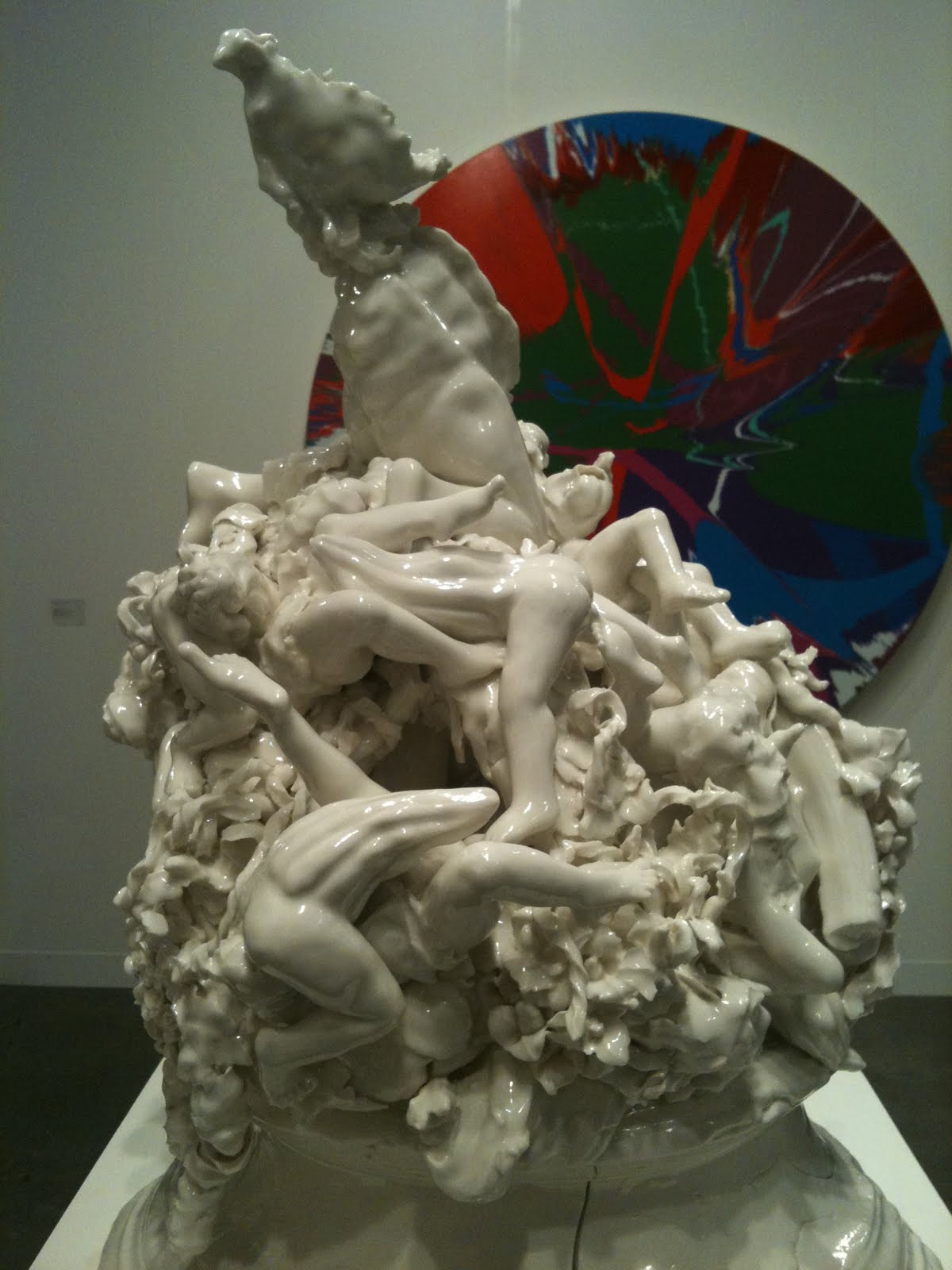
The first booth I encountered featured works by Nick van Woert who shows with Yvon Lambert. Modern Painters believes he is an artist to watch. I did get the issue free at the fair, but he has been popping up in a few collections. Though the show featured several gestural works on paper, van Woert is known for his classical casts covered in goo.
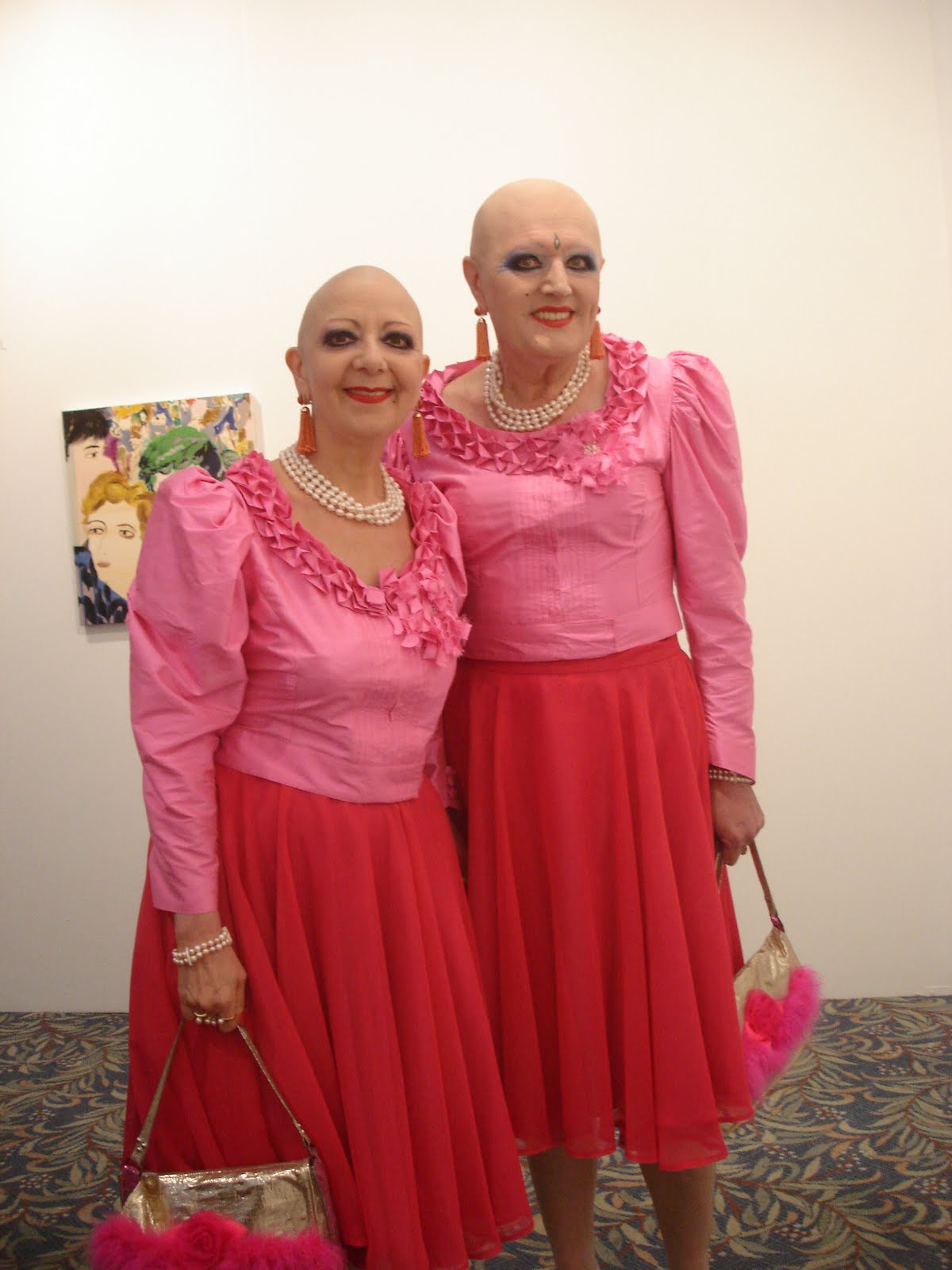
Then I ran into Eve and Adele, two of my favorite Basel fixtures. This German artist duo is the subject of many a work of art; hundreds of people photograph them and then Eve and Adele make drawings from the photos.
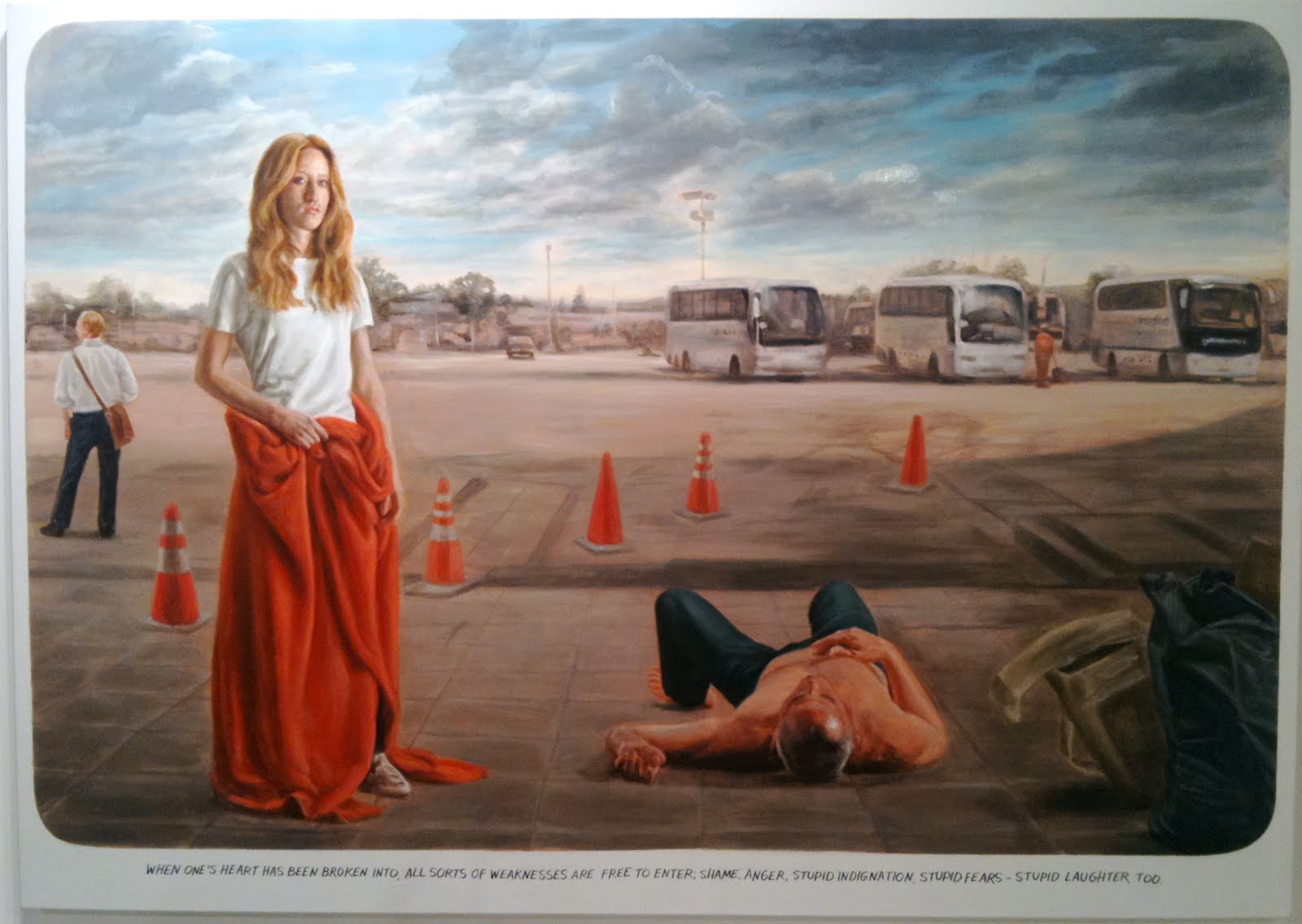
Leo Koenig had a small but beautiful painting of a woman lying and reading in her bikini titled Rooftop, 2010 by Ridley Howard.

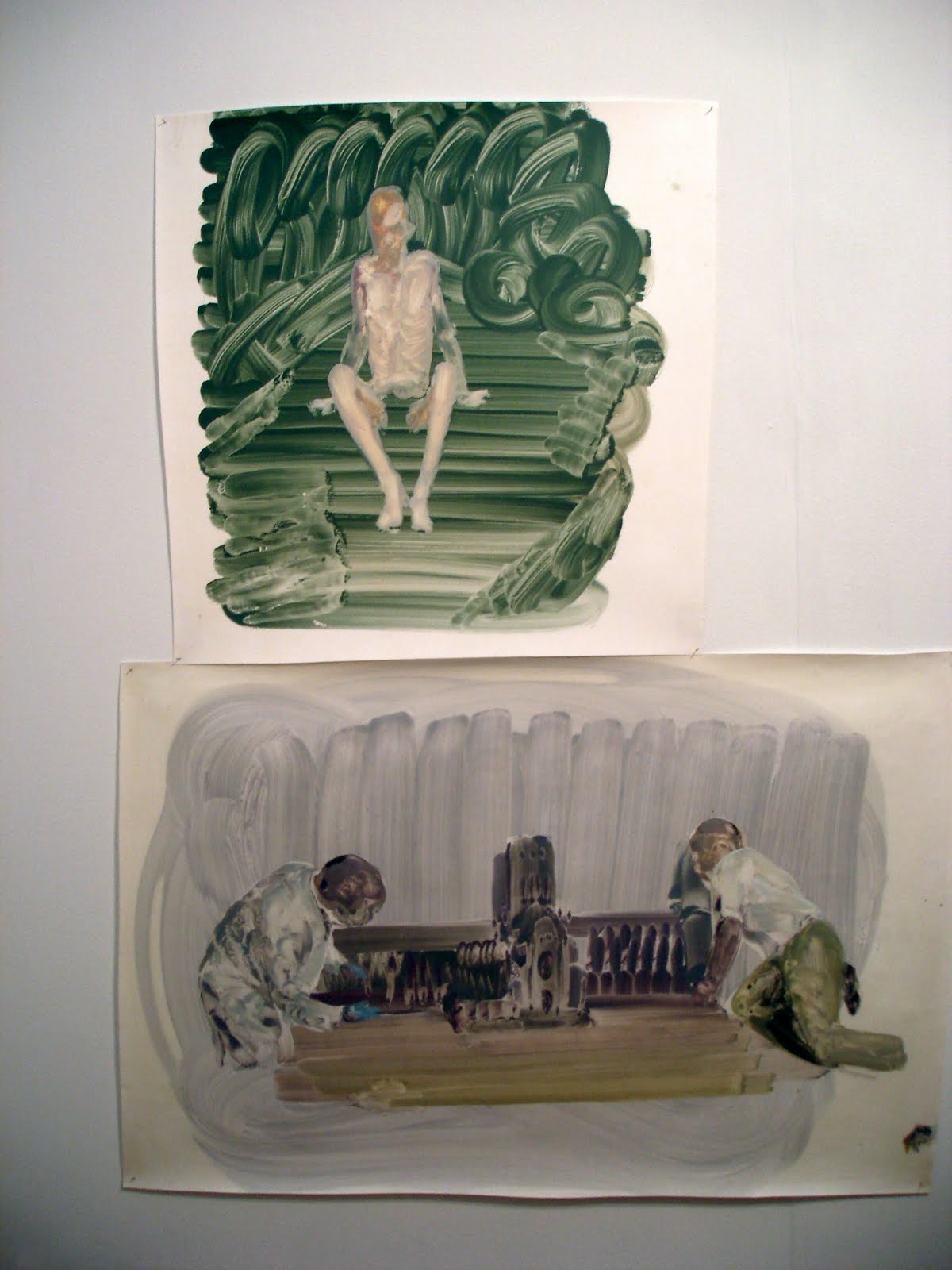
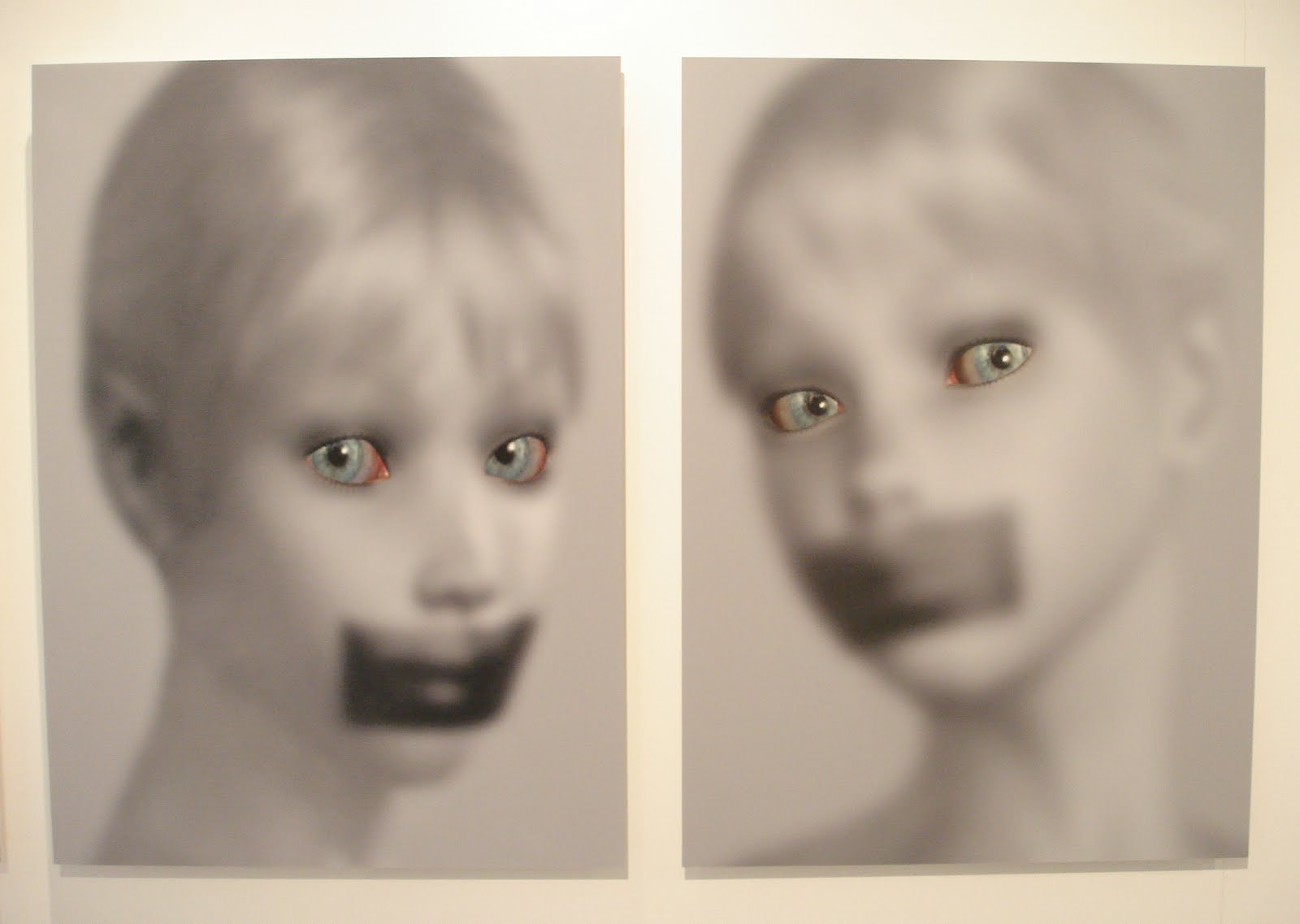
At Paul Petro (Toronto), I was captivated by the work of Stephen Andrews. The Canadian artist’s work imitates various modes of mechanical reproduction such as the CMYK dot matrix in print, film or television technologies. The pictures are painstakingly rendered by hand in an attempt to represent both the message and the means by which it is delivered.

P U L S E
Pulse features younger galleries that are a bit more established. I saw a great deal of figurative work there including the work of NYAA alum Amy Bennett who was showing with Richard Heller. There was a red dot.

Freight and Volume was showing this slick oil painting by the multi talented Richard Butler, who also founded the Psychedelic Furs.
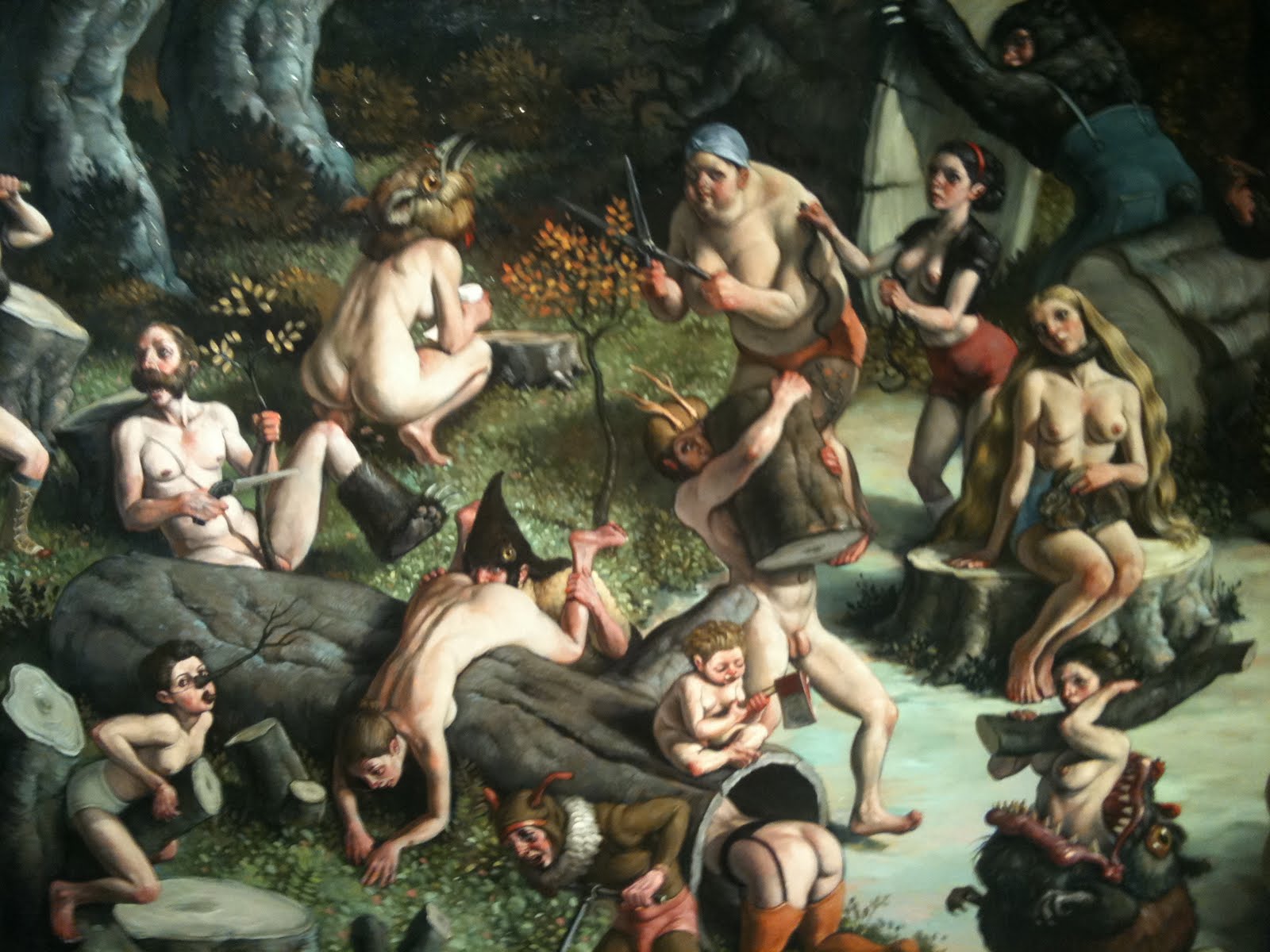
This amazing Brueghel-like painting (detail below) by Erik Thor Sandberg at Conner Contemporary (Fl);
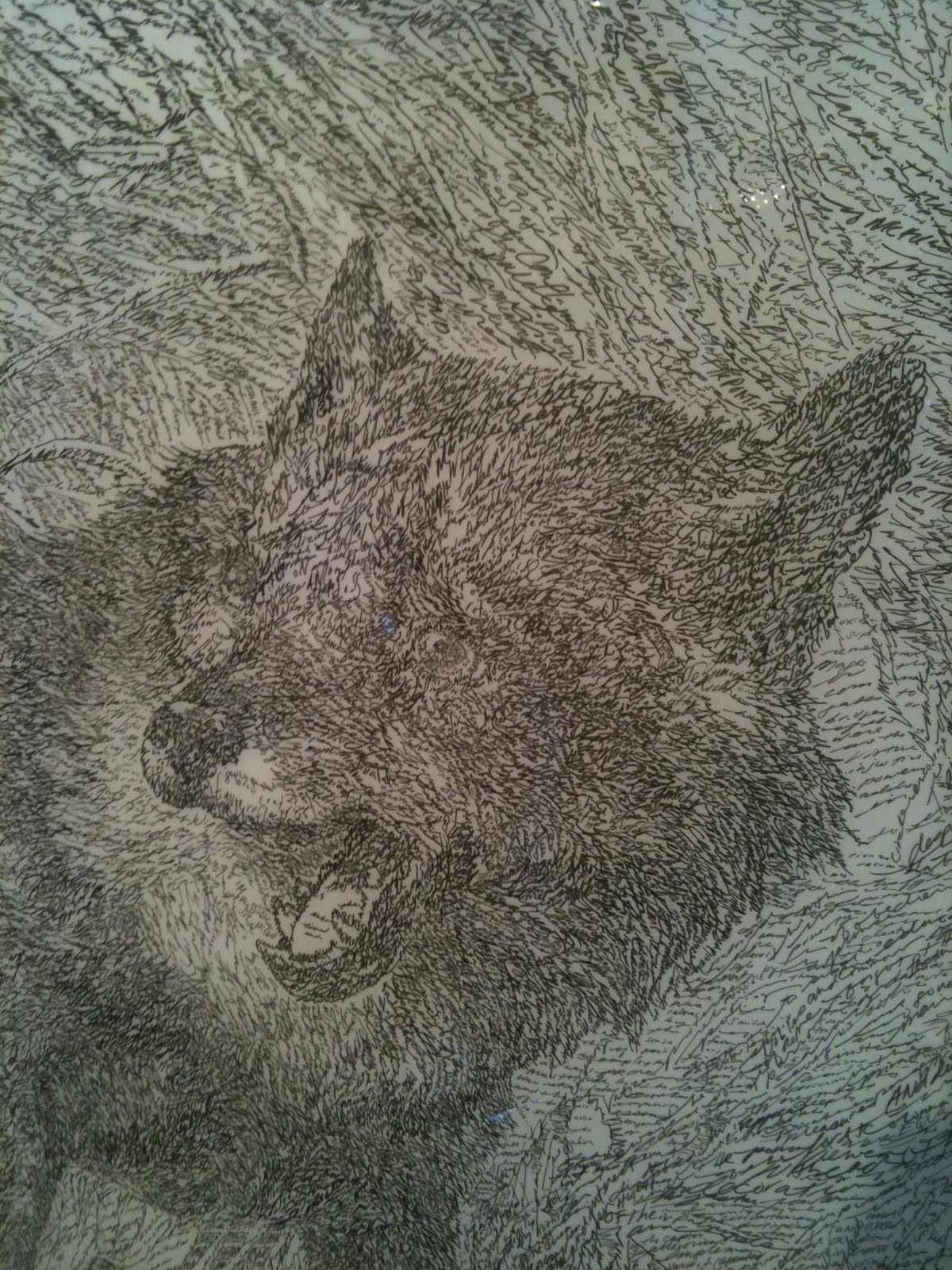
This drawing by Michael Waugh (detail below) of a wolf made out of writing, also very much a trend.
A watercolor by NYAA visiting critic and friend Kim McCarty at M+B;

And another beautiful porcelain figurative sculptures by Caro Suerkemper;

There was also this little beauty by Gretchen Ryan at Blythe Projects (LA). Painting child pageant queens was something I had always considered. There is so much art at the fairs its hard not to recognize yourself in some of the work. Seeing someone else carry out an idea you share has one of two outcomes; you either try to do it your way, or realize you don’t need to anymore.

S C O P E / A r t A S I A
Scope was showing with artAsia again this year in the Wynwood district. I ran into NYAA faculty member Jean Pierre Roy at the Rare Gallery booth showing some of his recent paintings.
 |
| JP (right) in front of his paitnting, The Broken Sleeper. See more at Rare Gallery. |
Christopher Henry gallery had an amazing room installation by knit bandit OLEK whose knitted pieces you may have seen around NYC. The closest to school is the bike on Greene street between Canal and Grand.

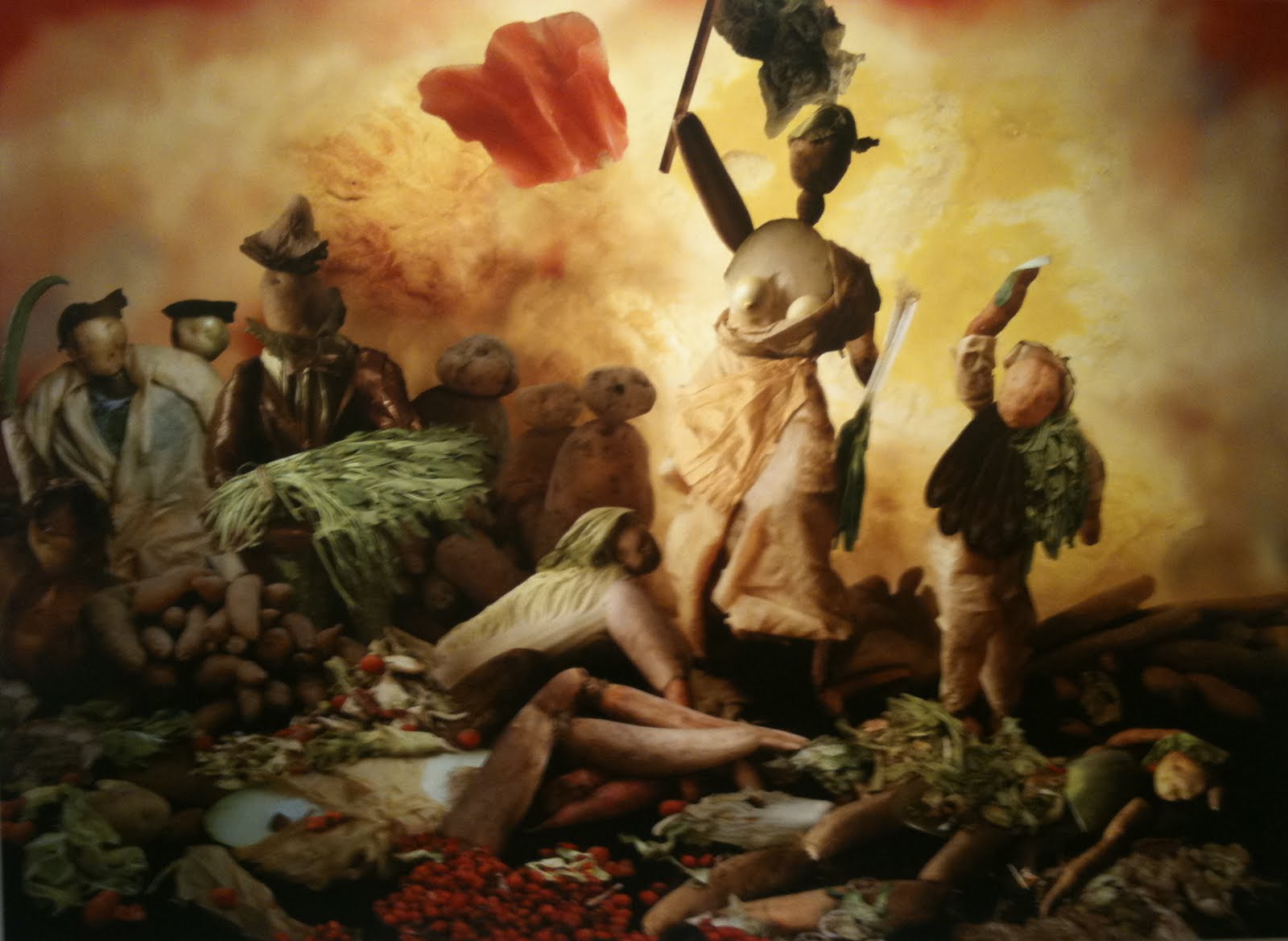
There was this take on Arcimboldo and Delacroix by Ju DuoQi called “Liberty Leading the Vegetables”
A sensitive set of drawings by Corrine von Lebusa at Silas Marder Gallery (NY);

Some beautiful figurative work by Yigal Ozeri;
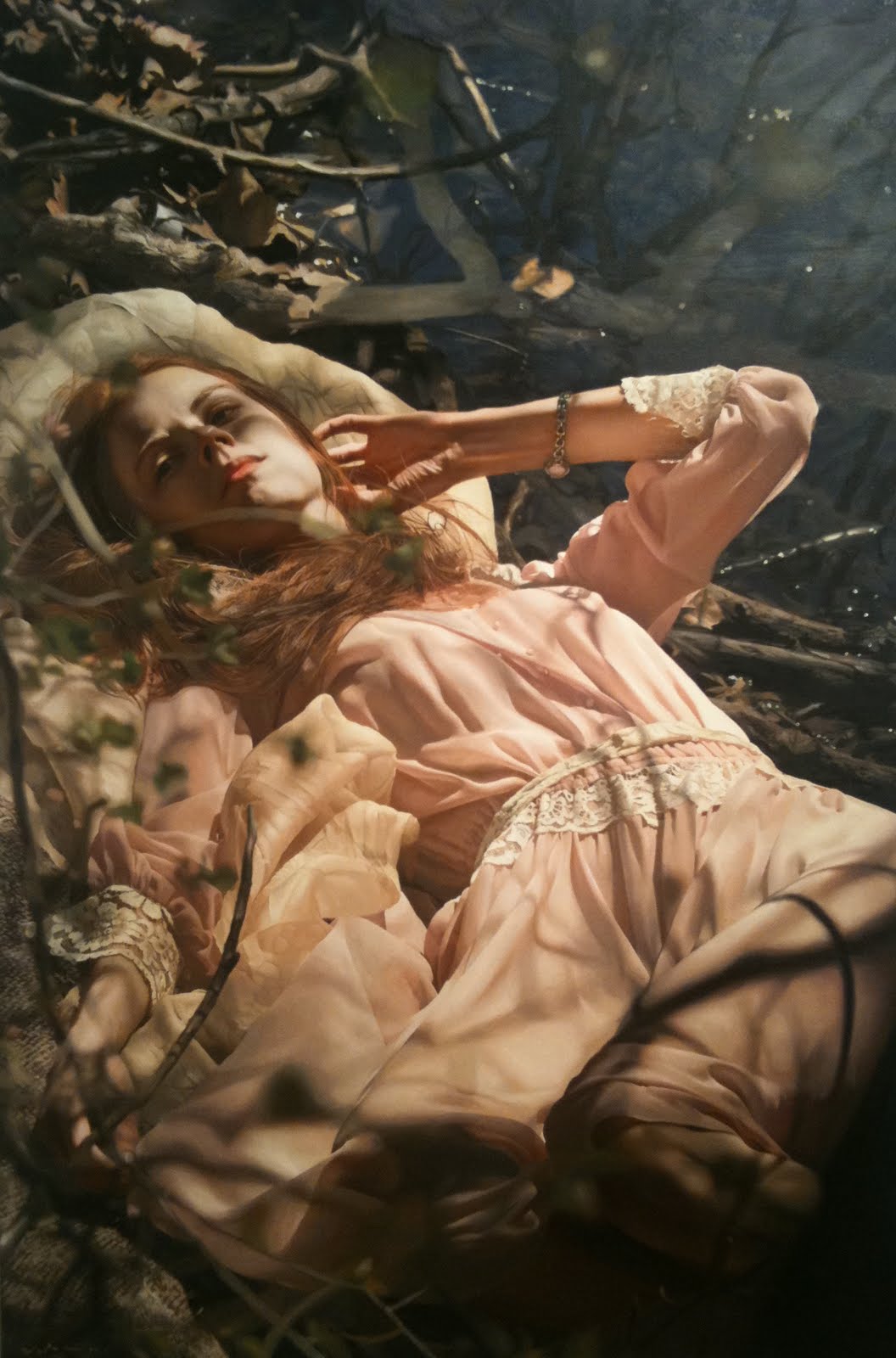
This fanciful flight painting by Jose Garcia Cordero.

Scope also had a section of walls this year featuring murals and design including wallpaper by Brooklyn company ESKAYEL, designed by artist Shanan Campanaro.

Z O O M
Zoom is the Middle Eastern Art Fair. The Middle East is such a dynamic part of the art world right now; on one hand you have a burgeoning art scene ie. the projected Louvre complex in Abu Dhabi, on the other many artists and writers imprisoned for their beliefs. Its hard to imagine what its like to be working under a restrictive political regime or in exhile from it. What questions they must face; to make work as protest, whether to avoid cliches or reinforce them.
At Galerie El Marsa in Tunisia I was taken with these paintings by Hicham Benohoud;

Robischon Gallery (CO) had these haunting photos by Halim Alkarim;
Another painting in writing, (artist unknown);
Other Openings and Activities
 Outside of the fairs there was a range of openings and exhibits including a small island show sponsored by LAND (Los Angelas Nomadic Division) and Opera gallery sponsored a vacant condo building of Mr. Brainwash’s work, the graffiti artist whom the Banksy film ‘Exit the Gift Shop’ is about. The beachfront ‘Exhale Pavilion’, funded by Creative Time, was done by architect and industrial designers Phu Hoang and Rachely Rotem. It was constructed of seven miles of reflective and phosphorescent ropes. Designed to interact with its environment, the ropes move with the breeze and even glow depending on the wind speed.
Finally, there is the beach; the perfect place to spend your last day in Miami.

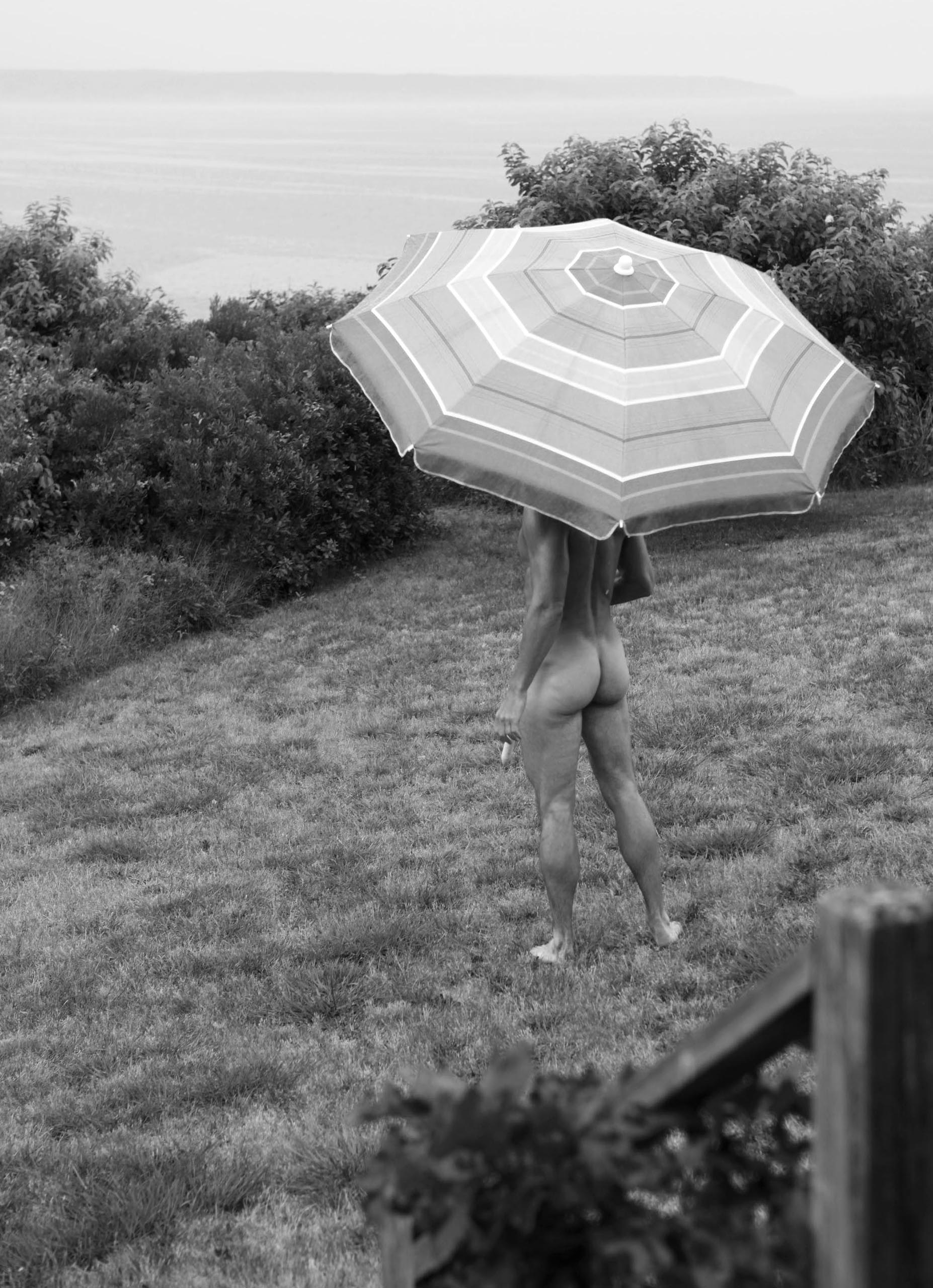
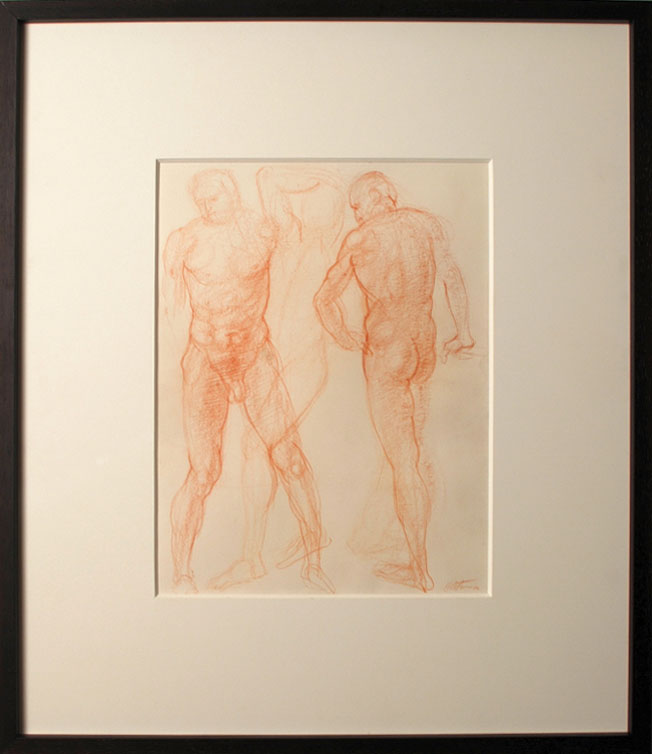
Uncovered
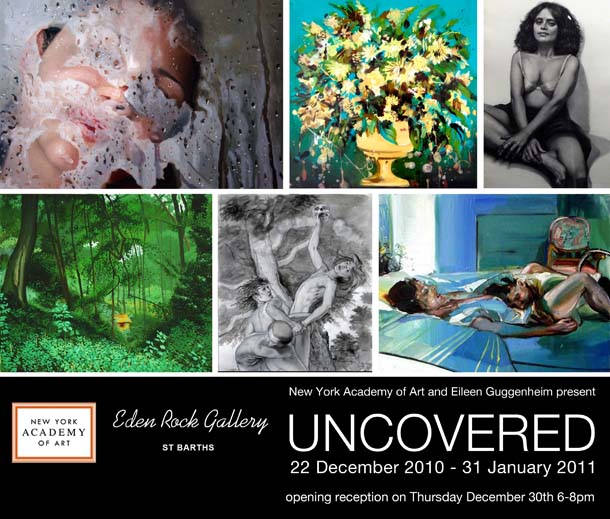
-
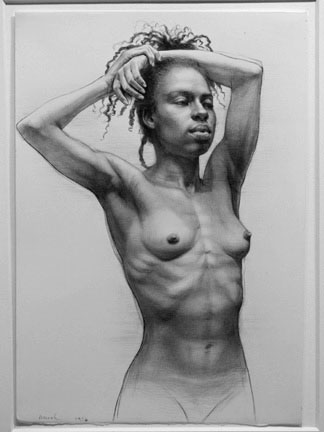
- Steven Assael
-
- Margaret Bowland
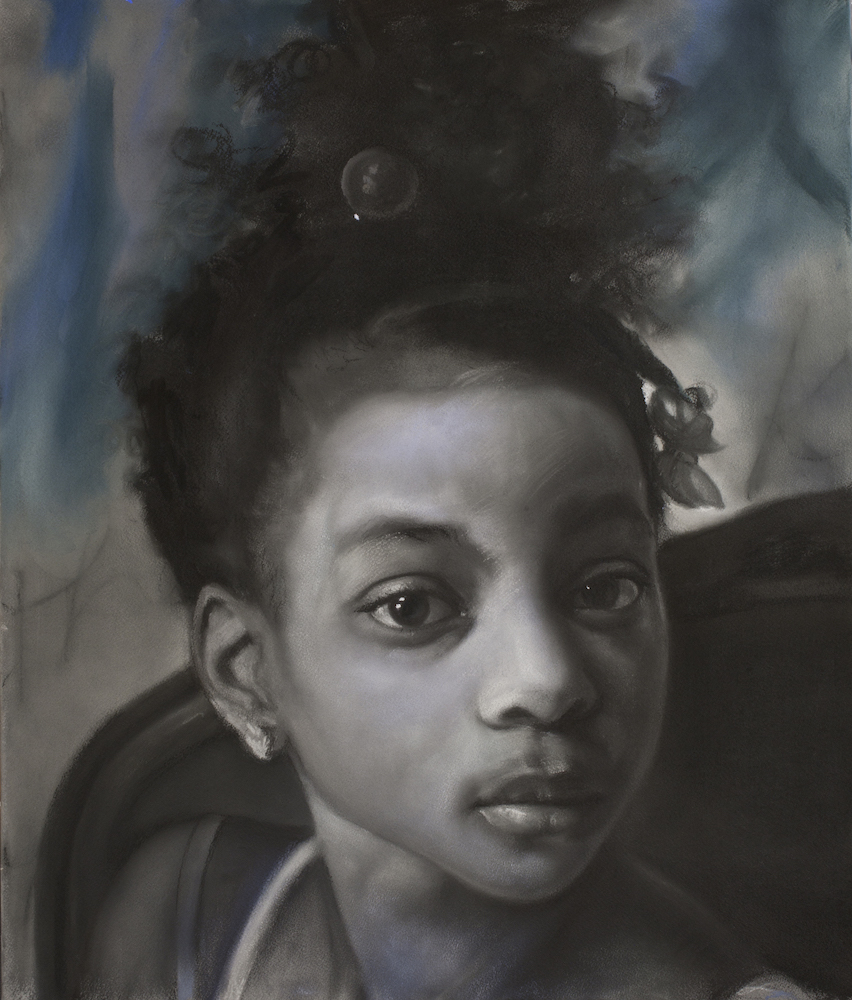
-
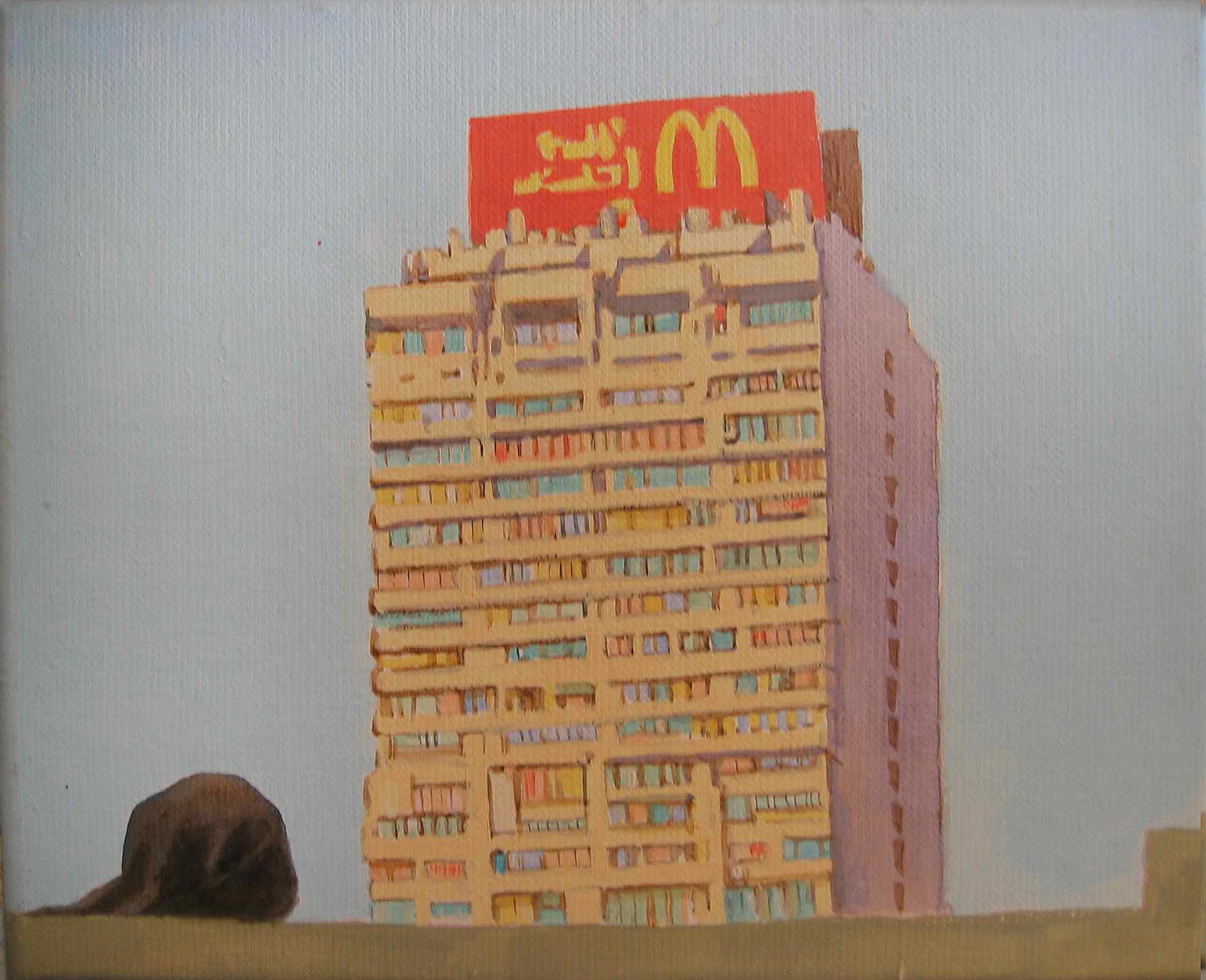
- John Bowman
-
- Lynda Churilla
-
- Harvey Citron
-
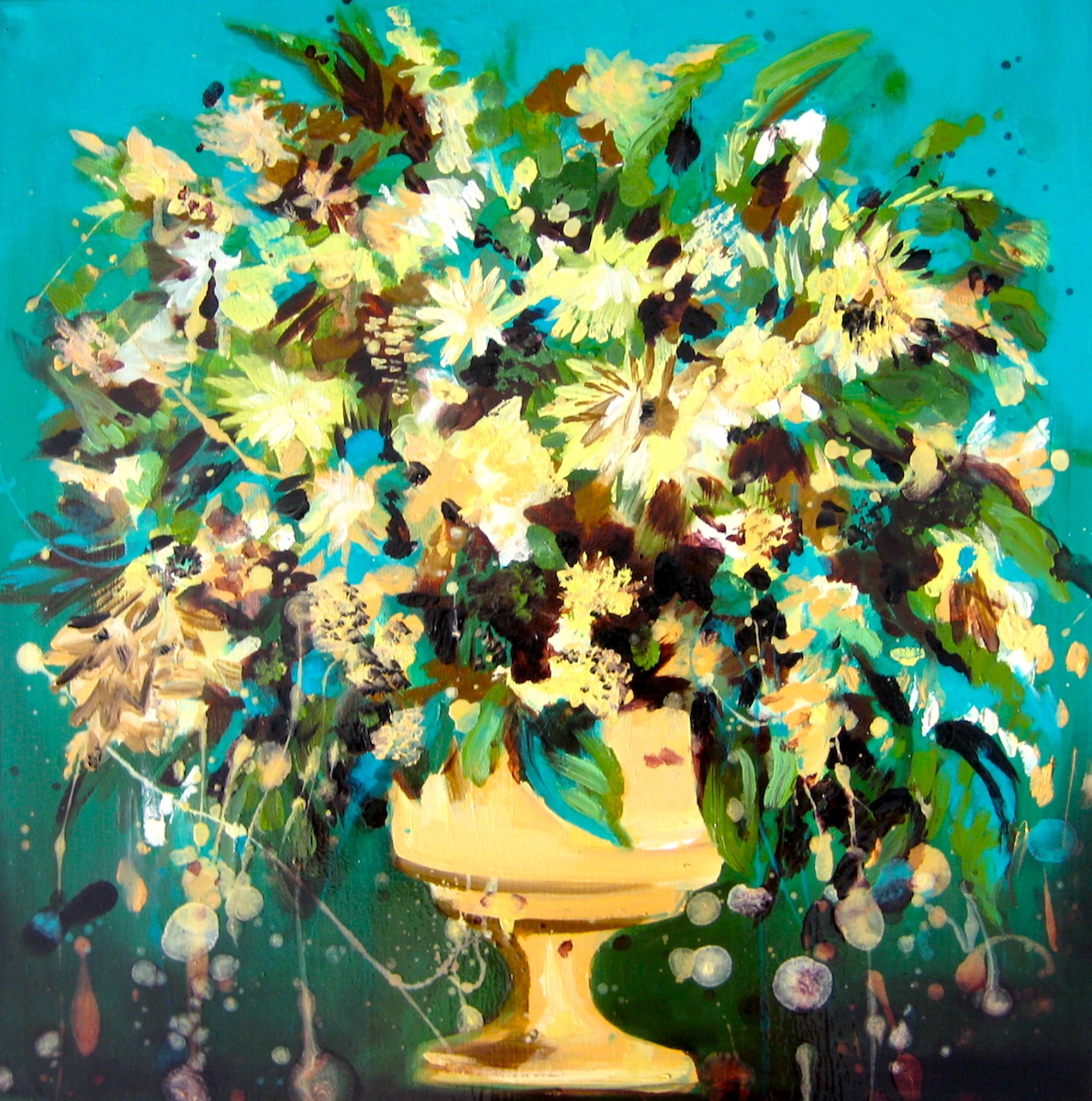
- Rosson Crow
-
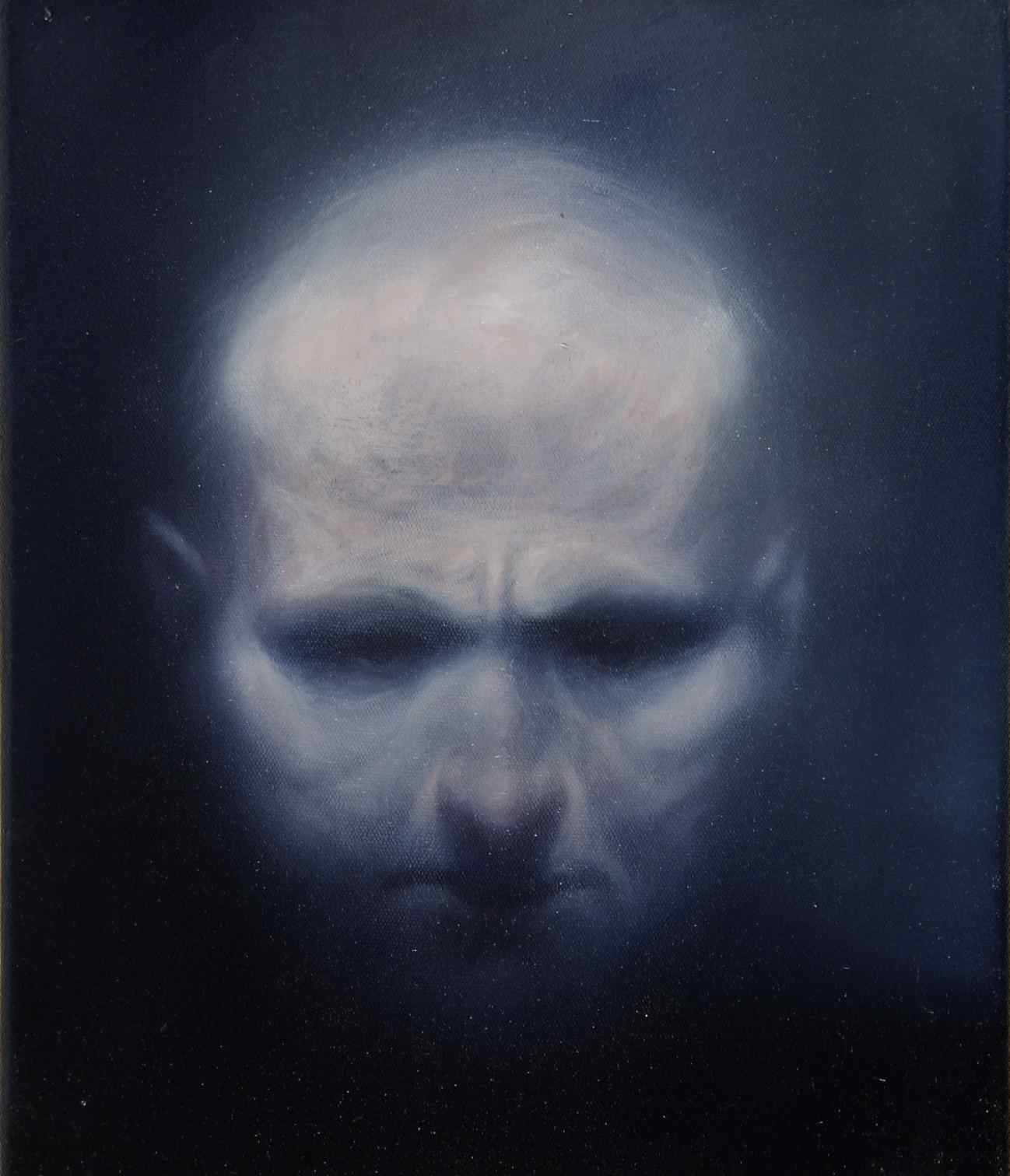
- Ken Currie
-
- Christian Fagerlund (MFA 2004)
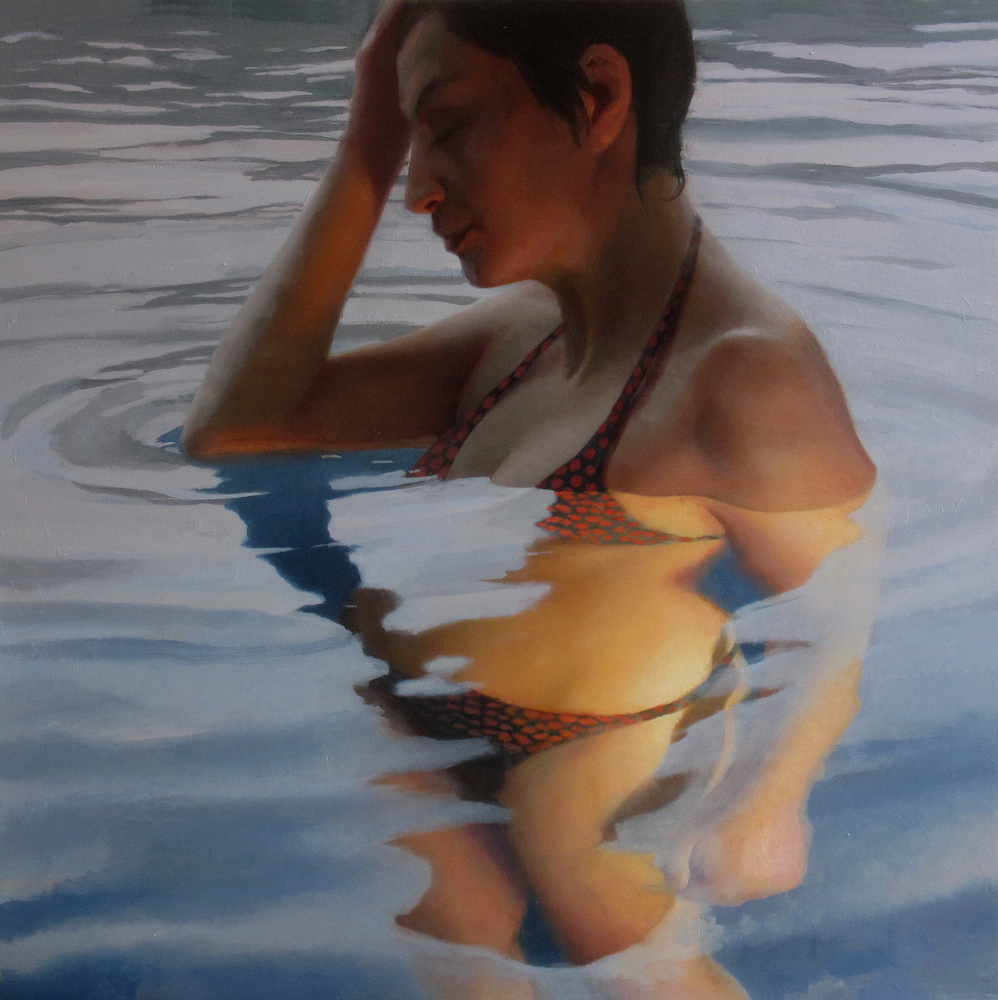
-
- Robert Feintuch
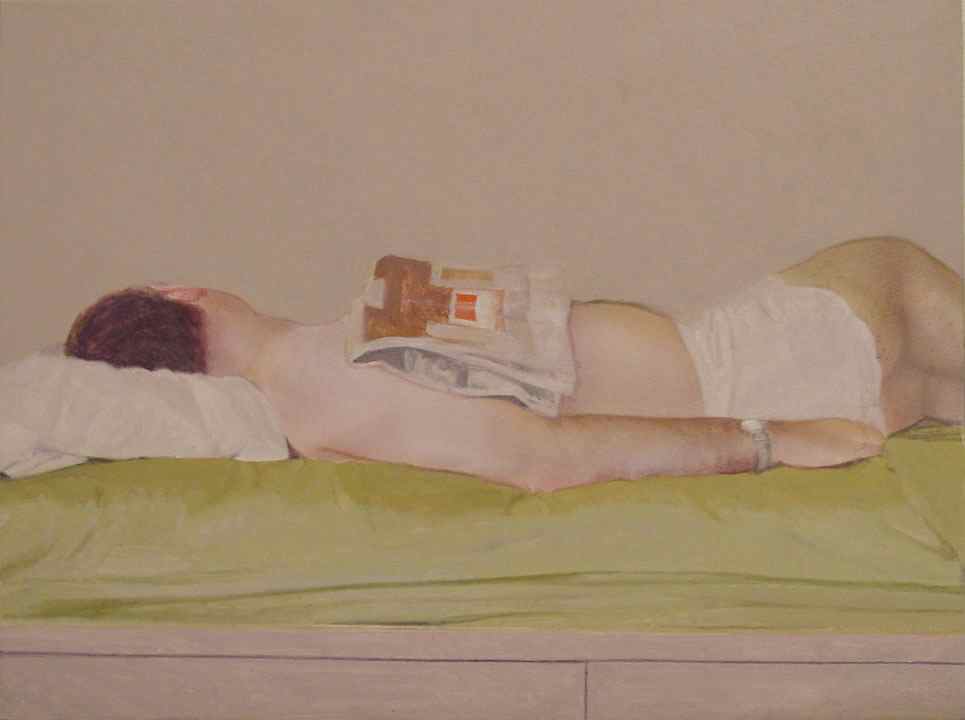
-
- Natalie Frank
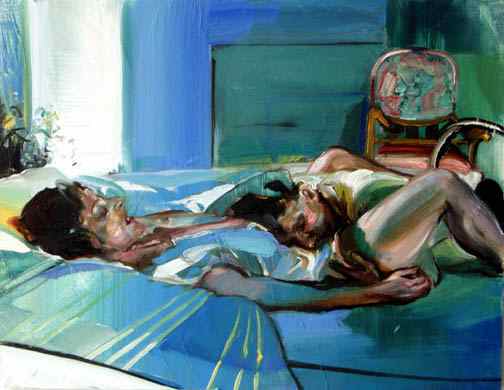
-
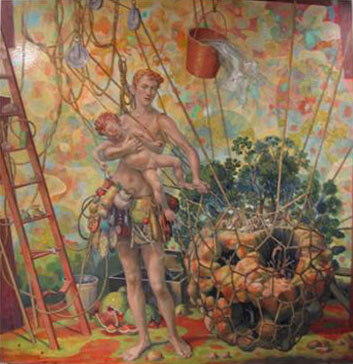
- Julie Heffernan
-
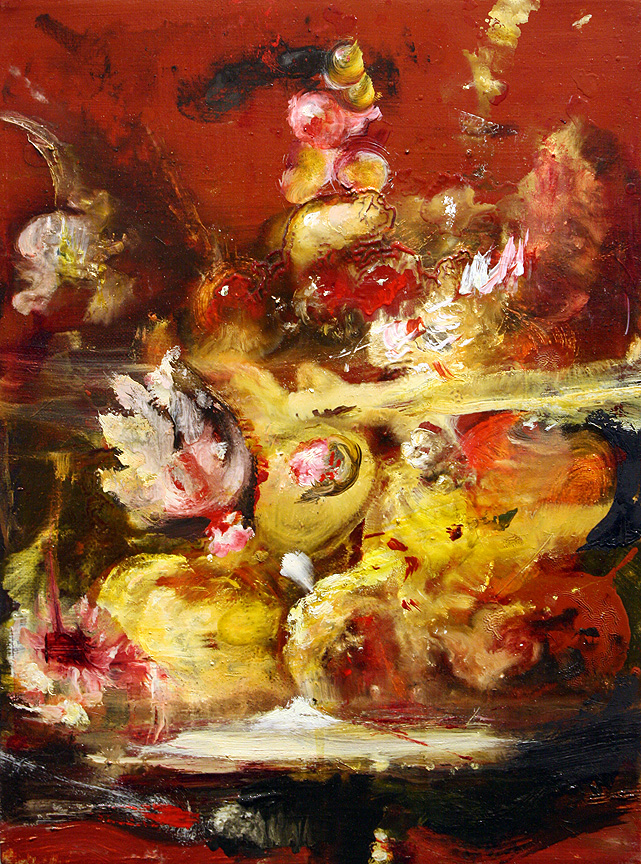
- Catherine Howe
-
- David Humphrey
-
- John Jacobsmeyer
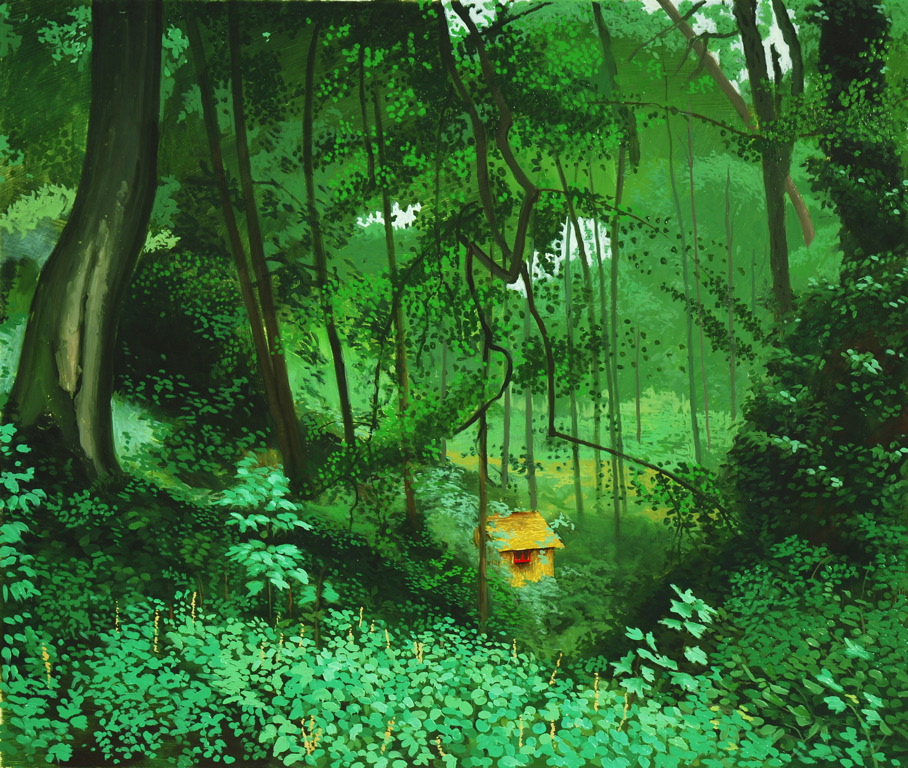
-
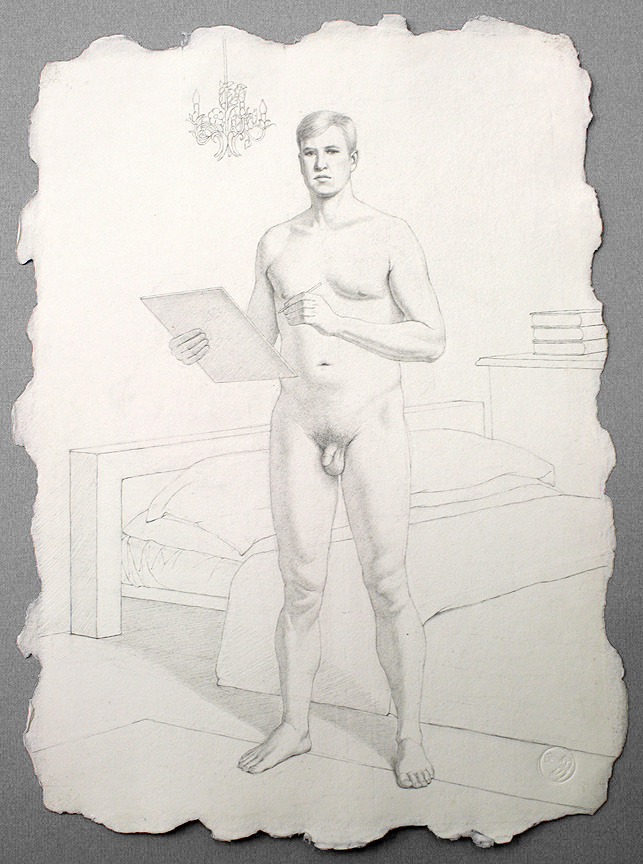
- Kurt Kauper
-

- Dik F. Liu

-
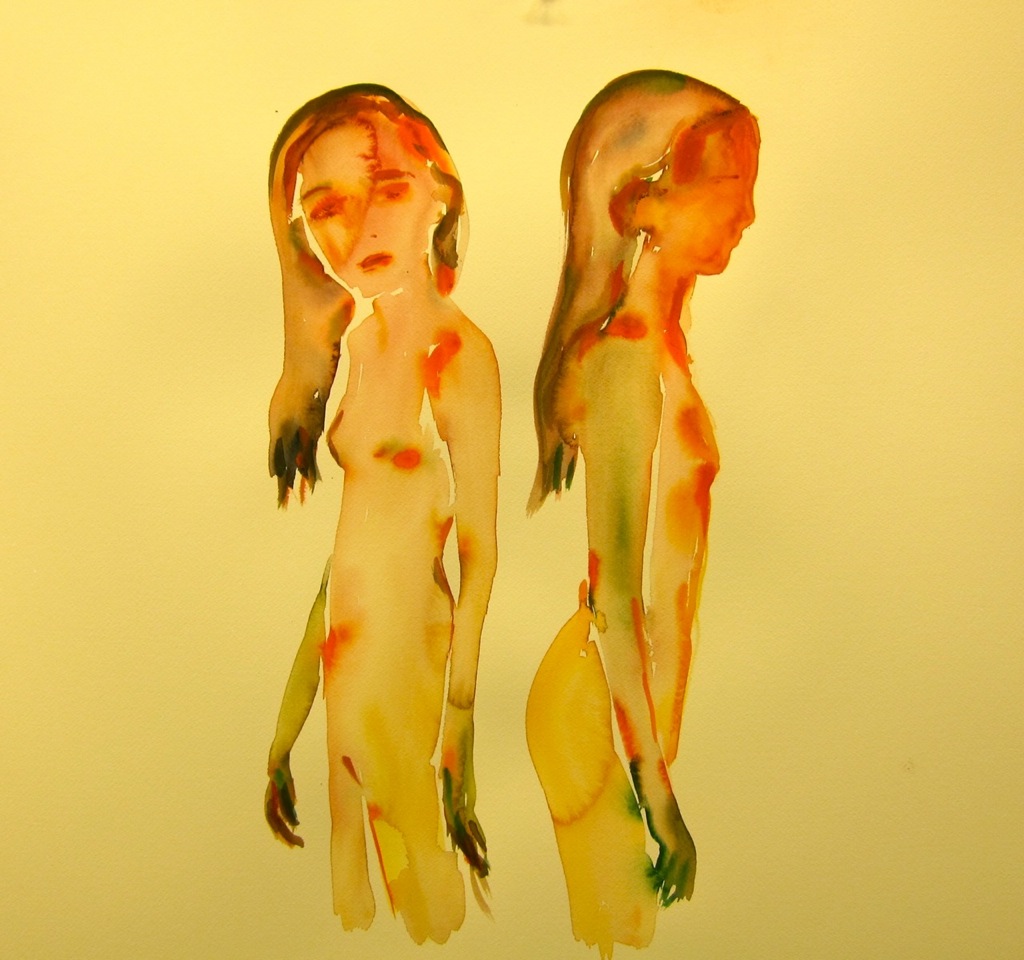
- Kim McCarty
-
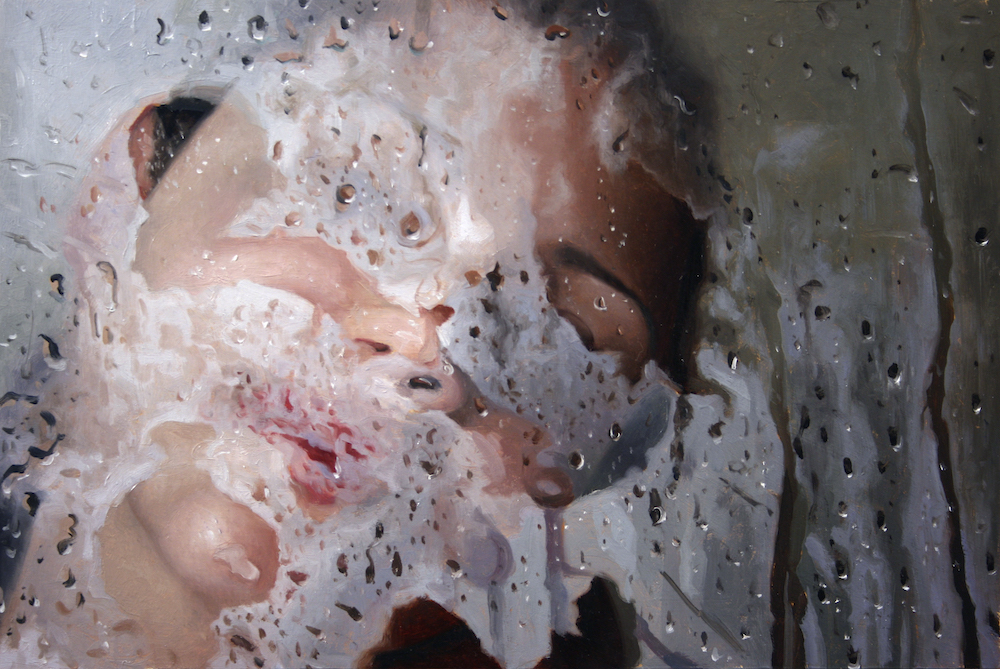
- Alyssa Monks (MFA 2001)
-
- Jean-Pierre Roy (MFA 2002)
-
- Wade Schuman
-
- Robert Taplin
-
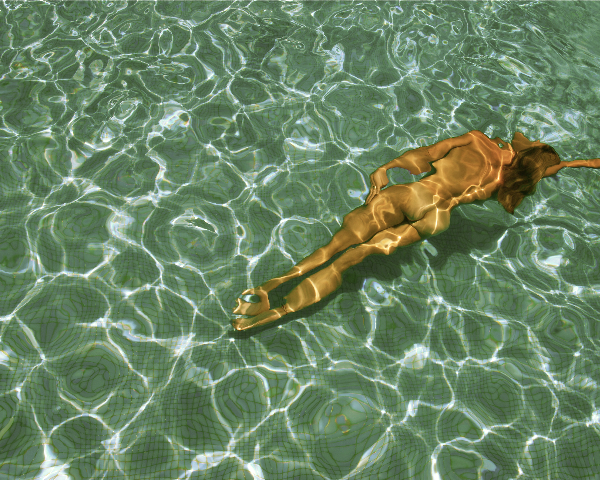
- Barbara Vaughn
-
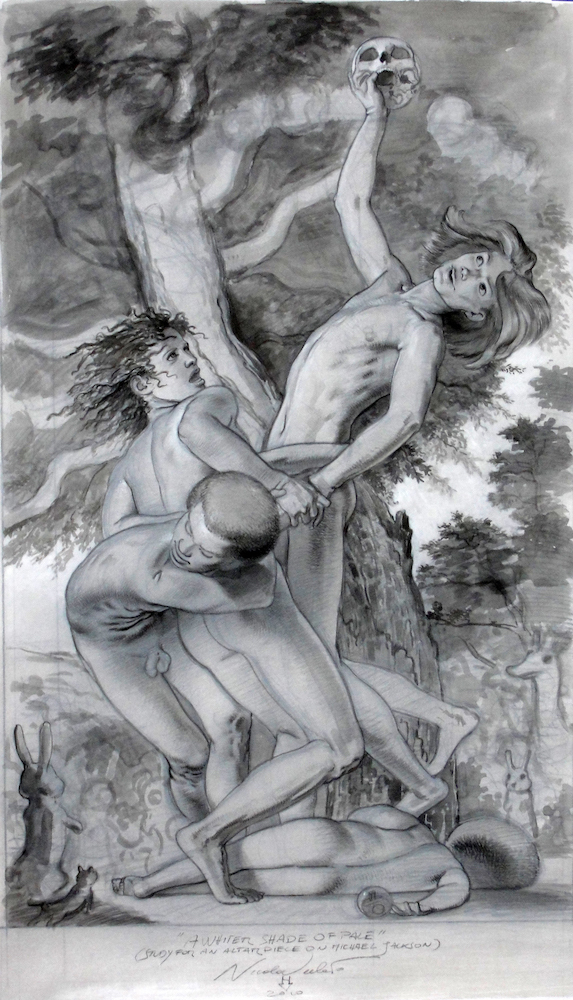
- Nicola Verlato
-
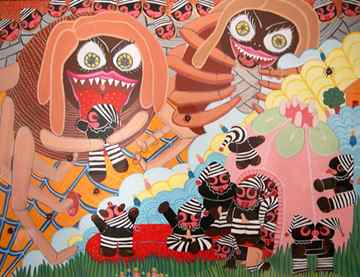
- Saya Woolfalk
The “Post-Crit Elixer”
By Catherine Howe, instructor
As one who has given and received countless critiques in the (too many to mention) years since I was in grad school myself, I would like to share with you some tips for making the most of your Thesis Project critiques.
- The most important thing I can tell you is keep is talking! Do not clam-up or shut-down/shop-for-the-holidays just yet… Talk with your fellow students. Share ideas while the experience is fresh.
- Write down the main ideas and comments that came from your critique and any questions you have about them.
So, what do I do with those ideas now?
Separate the ideas into the “macro” and the “micro”- in other words, identify the main points versus the trivial. This can be done with others if it is more fun.
1) Look through them and make a list of any structural or BIG issue comments that resonate with you but which will need to be addressed before moving on.
2) These macro issues will require some extended thought in the form of dreaming, scheming, what-if? explorations, and conversations with yourself. You may need to pull down some existing idols or get a New Year’s makeover.
3) Re-visioning. Give yourself time but keep making things while you do it. The works you do while you’re re-visioning can be “unimportant,” and never need to see the light of day. Ask yourself questions and let the answers stew. Draw diagrams, write poems, look at paintings somewhere, read books, muse.
The “Micro” comments will be easier, if you agree something needs to change, change it.
You may have to go back to “the drawing board†in order to try something out. There’s no way to make something for the first time that isn’t, at some level, a risk. Sounds obvious, but it is hard to put new ideas/material in the middle of a work you have been laboring over. There is, however, no other way. You have to experiment, see what works, be willing to get it wrong.
4) Once you think you have something that might work, don’t second guess yourself, try it!
5) Keep in constant dialogue with yourself. Do not change what does not, to your way of seeing, need changing. Do not assume that other people’s suggestions will always be the right ones to address a problem. Identify the problem underlying the suggestion and see what the “critter” inside has to say about solutions.
 |
| Catherine Howe, (detail of a work from the series, “Klytie”, 2007), oil/canvas 52 x 48 in. http://web.mac.com/catherinehowe/site/home.html |
Portraits of a Crit
By Catherine Howe, instructor at the Academy
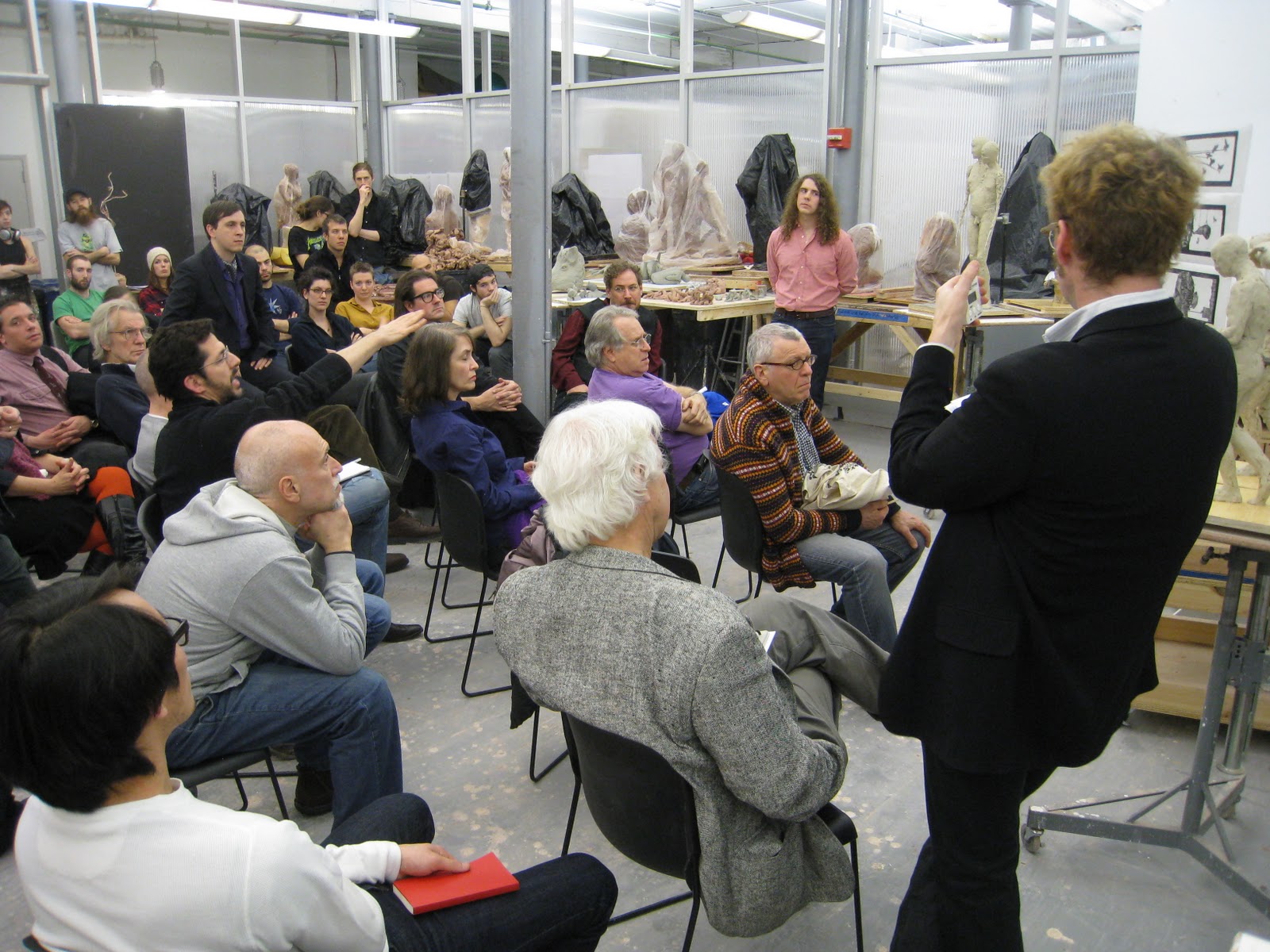
It was Sunday, 3:30 pm, December 12, the third and final day of Mid-Year Critiques at the Academy. I was sick at home, but instead of just thrashing about in a feverish “As if I could BE there” sensibility, I thought I would share some glimpses of the “Crit-ers” and the “Crit-ees” from the first two days, along with some gems I jotted down before I became senseless with flu.
A stellar cast of “Crit-ers” participated, encouraging the students and sharing critical feedback essential to their progress through their Thesis projects. Wade Schuman, Lisa Bartolozzi, Patrick Connors, John Jacobsmeyer, Vincent Desiderio, Bob Simon, Bruce Gagnier, Kurt Kauper, Harvey Citron, and Margaret Bowland were among those who shared the following insights. See if you can guess who said what…

On painting with a system –
“…you have to turn a system into an aesthetic, it is like some contemporary jazz; it sounds like it is fun for them (the musicians), but it’s not for me.”
On “accuracy first” in the painting process – “Manet always started with an accurate underpainting before proceeding to simplify things. This accuracy fed his abstraction.”
On the Ineffable in art – “Rodin would say that the most important part of great architecture is the part no one talks about: the AIR inside it.”
An apt metaphor – “Please don’t give me something that is predigested!”
On habitat – “Criticism is in the past tense and painting in the present. An artist can be imprisoned with each mark, virtually painting within that cloistered place of certainty, or the artist can paint from an observatory, where sensation defies absolute description.”
On originality – “The artist must be a good parking attendant- it is usually best to back in while trying to avoid bumping into the cars of famous people.”
On bad television – “All the painting tropes have been absorbed by popular culture. The artist must consider that paintings now carry the detritus of everything else.”
On the monstrous – “You have to think how the parts relate to the whole, there must be an overarching idea or a system of integration or the result is nothing but an accretion.”
On depth of experience – “The painter should express ideas through the paint itself: you have to take me there and make me care!”
And, finally – “Cough, sniff.”



Art & Culture Lecture: Alison Elizabeth Taylor
 |
| Security House, 2008-10, Wood veneer, shellac 93 X 122 inches |
Join us for the last Art & Culture lecture, given by contemporary marquetry artist, Alison Elizabeth Taylor. Well-known for reinvigorating the Renaissance craft of marquetry, or intarsia wood inlay, Taylor works in a medium once made popular during the unprecedented age of luxury of Louis XIV’s Court of Versailles. By choosing a medium that is typically associated with wealth and power to portray dystopian scenes of everyday life, Taylor creates a tension between the luxurious connotations of the material and a certain abjectness of the subject matter.
All lectures are free and open to the public!
Stay tuned to the blog for upcoming lectures in Spring 2011 including Donald Kuspit, Elizabeth Sackler and Phoebe Hoban.
-
Rosenberg, Karen. “Alison Elizabeth Taylor ‘Foreclosed’.†Art in Review. The New York Times. June 4, 2010.
- Kino, Carol. “An Artist Breathes New Life Into Renaissance Ways With Wood.†Arts. The New York Times. May 27, 2008.
- James Cohan Gallery
- http://www.artnet.com/artist/424152434/alison-elizabeth-taylor.html
Put some heART in your Holidays
A note from Academy President David Kratz:
Dear Friends,
Thanks to all of you who donated art to “Deck the Walls!” It’s thrilling to see such a wonderful show spring up almost spontaneously from everybody’s small works.
It’s such a great event. In addition to thanking all our supporters, “Deck the Walls” serves another purpose. It creates a level playing field that, because of the way it’s organized, encourages people to start collecting. Last year, many guests told me that they were normally too intimidated or indecisive to buy art but “Deck the Walls†made it so fun and easy that they bought more than one. Some literally left with armfuls!
Anything we can do to encourage people to start collecting, raises our own profile and supports the artists in our community. The fact that we also make it so much fun is a pretty nifty trick. But what else would you expect of a creative community like ours? In the spirit of the season, it’s a gift to all of us.
With warm holiday wishes,
David
Landscape Lenses
by Emily Adams (MFA 2011)
 |
| Richard Diebenkorn, Ocean Park #92 (1976) |
Nearing the end of the fall semester, theses are being written and paintings are being refined for December’s mid-year mark. Last year, Sir Kenneth Clark’s The Nude was a required reading by this time. To be honest, I wasn’t so terribly thrilled about the book, but I recently finished his chronicle of Western landscape painting in Landscape into Art. In the book, he devises categories for ways in which landscape has functioned in painting over time, from medieval symbol to Renaissance fact to expressions of empirical naturalism and human emotions to a parallel to the act of painting itself (twentieth century cubism and abstraction). I can’t help but reread Clark’s book with an eye on locating the place of the human figure in all of his examples, and then look around at contemporary American painters for whom ‘landscape’ is a significant subject. Where is the human figure in contemporary American landscape? Could it still be high up in a building or flying machine? Or perhaps it has moved on to be present in the very fact of its absence?
 |
| Mark Tansey, EC101 (2009) oil on canvas |
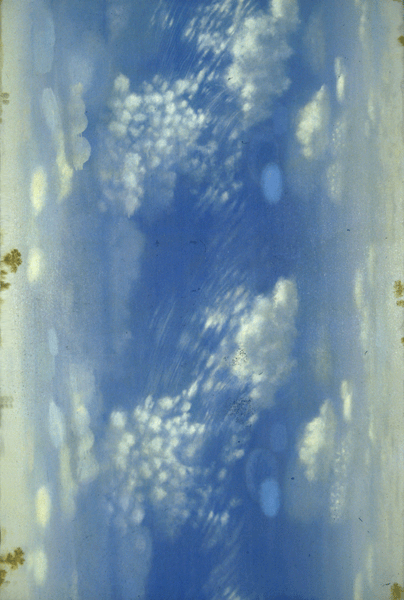 |
| Clayton Merrill, Falling (2002) |
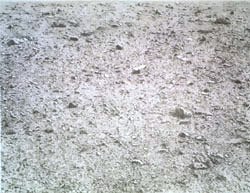 |
| Vija Celmins, Untitled (Desert), (1971) Lithograph |
As I gather together my work from the semester, I’m beginning to realize that the absence of the human figure is at the heart of where I’m going. I’ve been trying to incorporate still-life and landscape to make paintings that are essentially about humans, without humans. In the meantime, I will continue to compile and analyze my list of contemporary-American-unpeopled-landscape-paintings. Studio work updates coming soon…
Art & Culture Lecture: David Salle
Don’t miss tomorrow night’s lecture by David Salle, an American painter who helped define the post-modern sensibility by combining figuration with an extremely varied pictorial language.
 |
| David Salle, Angels in the Rain, 1998, oil and acrylic on canvas, 244 x 335 |
Major exhibitions of his work have taken place at the Whitney Museum of American Art in New York, the Stedelijk Museum in Amsterdam, Museum of Contemporary Art in Los Angeles, Castello di Rivoli (Torino, Italy), and the Guggenheim Bilbao. In March 2009 a group of fifteen paintings were shown at the Kestnergesellschaft Museum in Hannover, Germany. That same year Salle’s work was also featured in an exhibition titled “The Pictures Generation” at the Metropolitan Museum of Art in New York, in which his work was shown amongst a number of his contemporaries.
All lectures are free and open to the public!
Next up:Â Alison Elizabeth Taylor, Tuesday, December 14, 7:30pm
Escape from Studio Lockdown
Dear Friends,
Perhaps you’ve had a nice lunch and are now back in your studio revved up to create a masterpiece. You’ve got your tools laid out, a chunk of time to yourself and lots of great ideas to explore, and then it hits – despair. How do you tell if your artwork is good or bad? Indeed, are you good enough to even call yourself an artist?
Everyone experiences these feelings and they are made worse by constant news or press about the successes of others. In the past, I might have tried to tough it out by chaining myself to my easel. But now I know it might not be such a bad idea to have my girlfriend go out with me for sushi.
One important thing I try to do is to occasionally return to a place where I felt happy, safe, and inspired to work. The following video interview took place on a recent visit to my original fount of inspiration, San Francisco.
Yours very truly,
Hilary Harkness
Nothing Like the Real Thing
Gail Gregg is an artist/writer living in New York City. She is also a graduate of the New York Academy of Art. Gail made an extensive effort to interview artists, administrators and models from the Academy for her recent article, “Nothing Like the Real Thing†in ARTnews magazine. Featured in the article are Academy instructors Margaret Bowland, Judy Fox, Will Cotton, models Christophe Nayel, Alan and Morgan Williams, and others.
The art world appears to be catching up.
-Peter Drake
The practice of drawing from life models is growing in popularity
by Gail Gregg
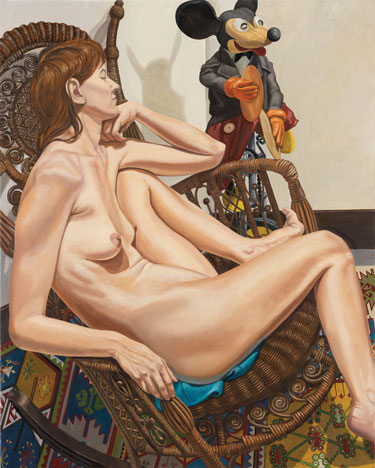 |
| Philip Pearlstein, Model with Mickey Mouse on Unicycle and Wicker Chair, 2009. ©PHILIP PEARLSTEIN/COURTESY BETTY CUNINGHAM GALLERY, NEW YORK |
Even in our image-drenched era, when Photoshop, 3-D computer modeling, and virtual reality have changed the way we look at the world, the centuries-old activity of observing the human body and translating it to paint, paper, or plaster continues to flourish.
In private studios, community centers, clubs, classrooms, and even the local pub, artists around the world still gather to work from live models. As cultural critic Wendy Steiner says in her newly published The Real Real Thing: The Model in the Mirror of Art, “At a time when virtually everything is virtual, art is attempting—earnestly, bemusedly, wryly—to return us to the real.â€
The Internet is in part responsible for the vitality of this traditional activity, which originated in the 16th-century art academies of Rome. The Internet has enabled artists to find each other, to organize groups, and to hire models with the click of a mouse. You can take life-drawing “classes†on YouTube; download live-model, 360-degree-rotation photographs; or participate in such online communities as TheGreatNude.tv or Barebrush.com—where potential members are admonished that the “nude is an unclothed or partially clothed human being. No denuded trees, stark buildings, leafless flowers, please.â€
For many artists engaged in working from life, though, the “return to the real†has been a lifelong struggle. For decades, many art colleges and university art programs have offered only introductory life-drawing courses, often taught by abstract artists who have never studied anatomy themselves. As New York painter Margaret Bowland says of her experience in the 1970s, “You literally couldn’t paint the figure. I wanted to learn how to draw a hand, and my painting teacher asked us to make a drawing of the fourth dimension.†At Yale during that same era, sculptor Judy Fox remembers that -“figuration was pretty much derided.â€
This training void has led countless figurative artists to seek out remedial instruction at such institutions as the Art Students League of Denver, the Pennsylvania Academy of the Fine Arts, or the New York Academy of Art, where academic dean Peter Drake reports a record enrollment of 120 graduate students, even during the recession. “We’re turning people away,†he says.
Will Cotton is one such artist. After completing his undergraduate training at Cooper Union, he studied life drawing at the New York Academy, in 1987 and ’88, and now teaches there as a senior critic. Though his high-camp compositions are all about fantasy, he wants his subjects to feel as “alive and believable†as possible. “I have no ability to work from my imagination,†Cotton says. “Whatever I’m painting has to be in the studio. What that means to me is models posing, props, and maquettes.â€
Many artists compare working from a model to meditation, another activity that requires intense observation and focus. Some are fascinated by the intricacy of the human body, others by the way light and shadow can make it almost abstract or by the technical challenge of training the hand to render what the eye sees.
For Philip Pearlstein, who has been painting realistic nude “still lifes†since making an abrupt switch from abstraction in the late 1950s, working from life can be a “Zen-like experience.†He says, “I learned early on that you can’t rely on knowledge of anatomy. One of the things that’s exciting is that you have to make decisions. Every time the model breathes or moves, things change.â€
Elizabeth King, a sculptor who teaches at Virginia Commonwealth University, agrees. “You discover the body again each time you depict it—its strangeness is made new to you all over again.†Working from the model, she says, “involves a huge amount of eye-hand judgment, spatial judgment, judgment about form.â€
And Steve Mumford, who travels with his watercolors to Afghanistan and Iraq to record the wars, finds life drawing an antidote to the urgency of working as a combat artist. “I always wish we could have one pose for the whole session, to really look,†Mumford says of the drawing group he attends. “The closer in you get, the more there is to look at.â€
Central to this activity, of course, are the models themselves, many of whom begin posing to pay the rent between acting or dancing gigs. But for those who are satisfied with the fees ($18 to $30 an hour), are comfortable disrobing in front of strangers, and can learn the art of the gesture pose (a kind of slow-speed dance movement) or the trick of holding an uncomfortable twist or turn for 20 minutes at a time, sitting for artists promises singular rewards. These models speak of the gratification of appearing in a work of art, the friendships that sometimes result from modeling sessions, the satisfaction of watching students learn anatomy, and a sense of freedom and self–invention that can come with the job.
Claudia Hajian considers modeling as a full-time occupation. Much in demand at the New York Academy, the Art Students League of New York, and Spring Studio, Hajian is a former geography teacher who left teaching five years ago and began posing while she sorted out her future. Quickly, though, she decided that modeling was her true calling—a calling she celebrates on her blog, Museworthy. “I feel much more appreciated and valued as an artist’s model than I did at any other job,†Hajian says.
In Denver, model Kirsten Dean says she began modeling because she “just loves being in the presence of artists.†Christophe Nayel is able to book between 20 and 30 hours of work each week because of his “theatrical†poses. “I love to entertain,†he says. And Morgan and Alan Williams, a married pair who often pose together, say they enjoy the creative challenge of inventing interesting interlocking poses. “When we’re on the modeling stand together, there’s a chemistry that comes through,†says Alan.
Personal chemistry with the artist turns out to be critical to the success of a model—and to the work that emerges from a session. Many artists, such as Inka Essenhigh, say they prefer models who bring their own personalities—an “air of dramaâ€â€”to a pose, rather than those who are more passive. Painter Natalie Frank seeks models who “have a kind of beauty that’s a little off, a complicated kind of beauty.†Pearlstein looks for those who are flexible enough to hold difficult poses day after day. And painter Daniel Maidman prefers models with “expressive faces and expressive bodies—which is not the same thing as beauty.â€
While many artists locate models on websites such as OneModelPlace, Dallas Live Models, or MuseCube, others scout for prospects in their neighborhoods, their social circles, their own homes, or even their own mirrors. Bowland typically recruits subjects from her Brooklyn community, such as the little girls who appear (clothed) in whiteface in Portrait of Kenyetta and Brianna (2008), which won the 2009 People’s Choice Award at the Smithsonian’s National Portrait Gallery. “I never work with professional models,†she says. “For me, my models are like a movie troupe. The ideas are very much generated by the people I work with.â€
Photographer Gary Schneider used friends and colleagues, rather than professional models, for his “naked portraits,†which were the subject of a show earlier this year at the Reykjavik Art Museum. He asked them to lie on the floor in a darkened room and set his camera, which hovered on a tripod, to a three-hour exposure. He then “drew†on the subjects with a flashlight at close range, exposing parts of their bodies one section at a time until, cumulatively, the whole figure was captured.
The process was particularly challenging for Schneider’s models, who had their bodies examined in minute detail for several hours. “Not unlike a considerate dentist, he talked occasionally, telling me which part of the body he was about to focus on and asking me, for example, to let my leg or foot lie in a certain way,†remembers Trevor Fairbrother, an independent curator in Boston.
In most life-drawing classrooms, the ¬nudity of the model becomes commonplace. “There’s always, fairly quickly, a huge banality to nudity,†says sculptor Robert Taplin.
Outside the classroom or studio, though, views on nudity can be startlingly different. “It amazes me how many people are still hung up about nudity,†Hajian says. “I’ve had men not want to go out with me because of my work.†In Denver, anatomy teacher Joanne Burney asks her models to pose in leotards for the first few classes at the Art Students League, until new students feel comfortable looking at the body. “Not everyone can separate the art from other subjects, such as sexuality or religious beliefs or cultural norms,†Burney says.
Nearly every figurative artist reports difficulty selling and showing work that focuses on the nude. And they note that working from models is sometimes prohibitively expensive. “It’s almost impossible to sell a nude,†laments painter Sigmund Abeles, for whom the nude has been a career-long subject. Painter and Royal Academy member David Remfry agrees. “I’ve drawn thousands of nudes,†he says, “but have sold very few.†And Fox has had a museum show canceled because trustees worried about exposing children to her sculptures of nudes.
“You do lose a certain percentage of the client base, particularly with younger collectors who have young children,†concedes Cheryl Fishko, co-director of Forum Gallery, which represents many artists whose work focuses on the nude.
Yet “Changing Poses: The Artist’s Model,†on view at the Rhode Island School of Design Museum of Art through May, reminds us, artists, from Dürer to Sargent to Picasso to Warhol, have been fascinated with the human form for centuries, and that fascination persists.
“People are still being born,†Bowland says about the pursuit of working from life. “People are still beautiful. People still matter.â€
Gregg, Gail, “Nothing Like the Real Thing.” ARTnews. December, 2010.
http://artnews.com/issues/article.asp?art_id=3129
*hyperlinks added by the editor of the Academy’s blog